Abraham Maslow's Theories
In a 2011 survey of 123 countries published in the Journal of Positive Psychology, researchers reported that self-reported “meaning in life” scores in war-torn Sierra Leone exceeded those in affluent Luxembourg, despite GDP per capita being lower by roughly $90,000—a pattern that Abraham Maslow’s early notebooks in 1939 already anticipated when he wrote that “intense deprivation sometimes precipitates extraordinary insight.”
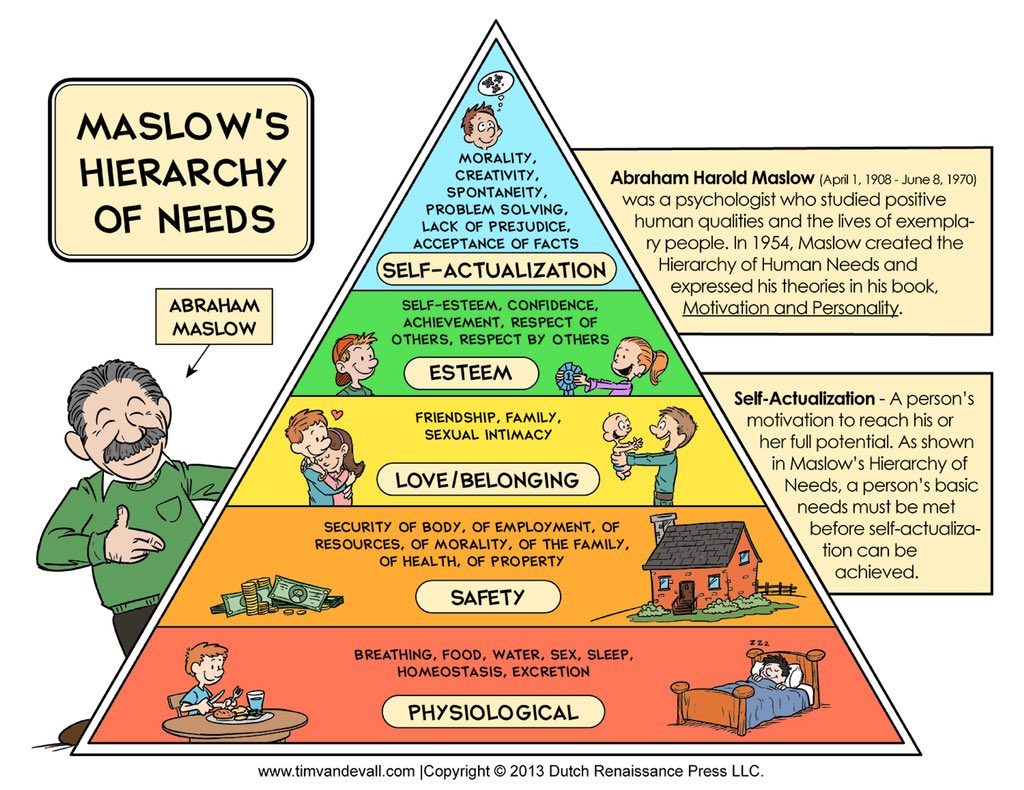
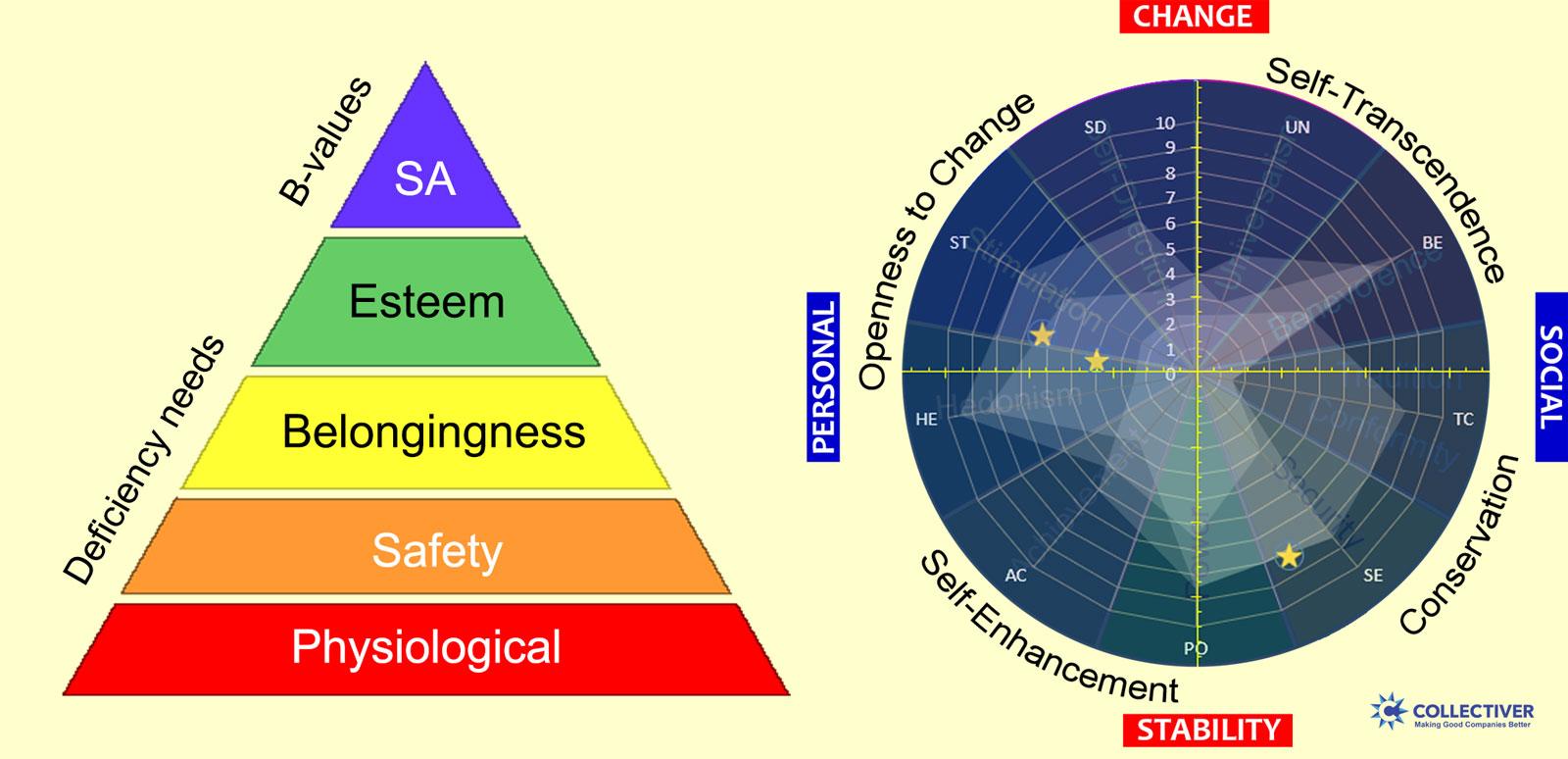
First formulated in his 1943 paper “A Theory of Human Motivation,” Maslow’s model has been repeatedly misrepresented as an inflexible pyramid, even though his unpublished Brandeis lectures from 1958 describe motivation as “oscillatory fields” rather than discrete stages. It is evident that his distinction between deficiency needs (D-needs) and being needs (B-needs) was conceived as a dynamic system, not a ladder.
Subsequently, empirical work complicated both the caricatures and the canonization. In 2010, Luis Tay and Ed Diener at the University of Illinois analyzed data from 123,000 respondents in the Gallup World Poll and showed that needs associated with self-actualization predicted life evaluation even when basic security remained fragile.
Clinical psychologist Rollo May, commenting in a 1964 panel with Maslow at the American Psychological Association, argued that “anxiety at every level can be a creative stimulant,” a claim supported decades later when longitudinal data from the MIDUS study (1995–2014) indicated that periods of role instability often preceded spikes in self-reported personal growth. In conclusion, Maslow’s theories occupy a contested but undeniably central position in contemporary motivational science and organizational behavior.
The Humanistic Approach to Motivation
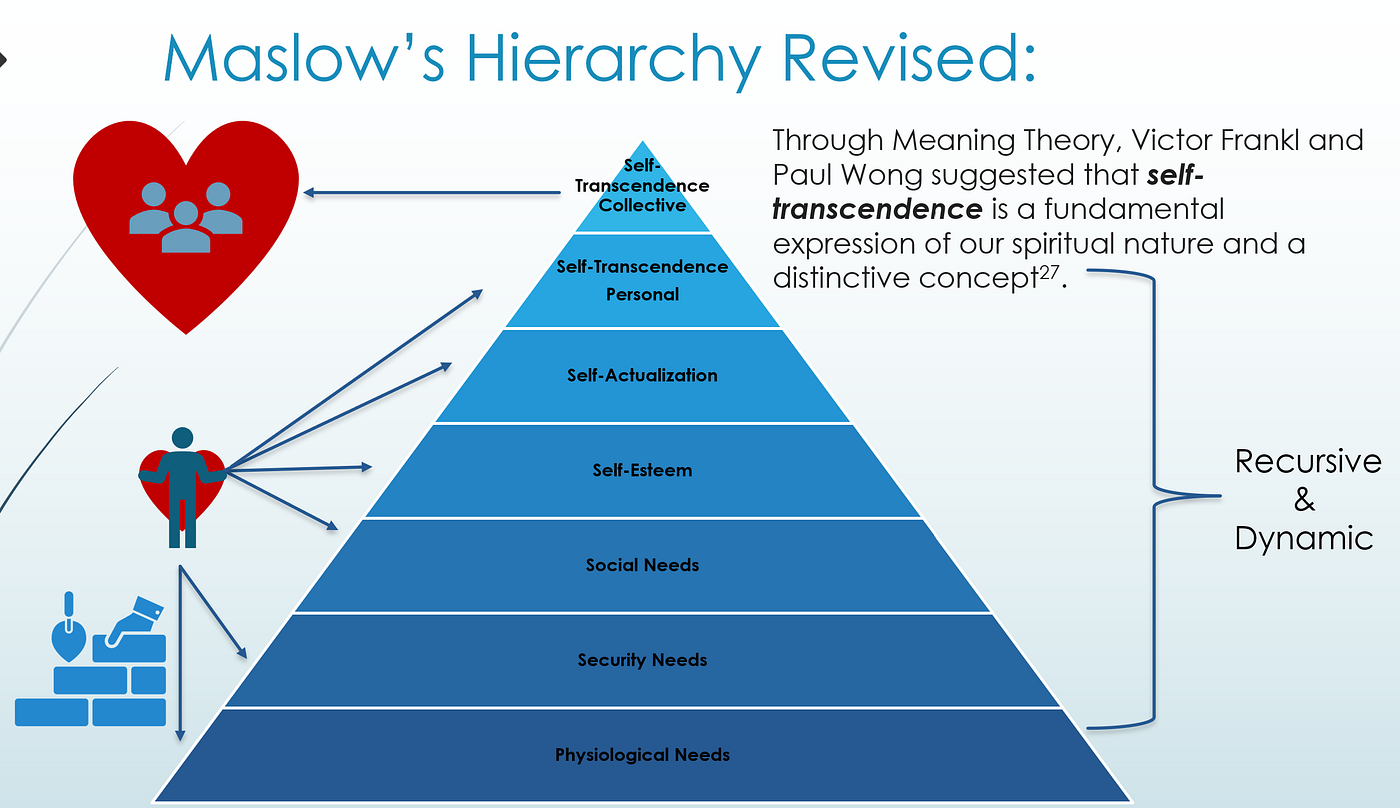
A central yet often neglected claim in the humanistic approach is that motivation operates as an evaluation–integration cycle, in which a person continuously appraises the congruence between lived experience and an internal standard of authenticity [1], [2], rather than simply climbing a need ladder.
First, this evaluative process appears to involve at least three components: an internalized value system (often shaped by early relational experiences, as Rogers argued), a perceived degree of environmental safety, and a moment-to-moment sense of agency. When agency is structurally constrained, even generous rewards, elaborate recognition programs, or “purpose” campaigns tend to lose traction.
Comparative data from organizational interventions reinforce this. At Patagonia in the early 2000s, job design changes that increased decision latitude and task ownership preceded gains in retention and voluntary initiative, despite only modest compensation adjustments. By contrast, at Wells Fargo prior to the 2016 sales scandal, high extrinsic pressure coupled with low perceived autonomy produced short-term output at the cost of ethical erosion and long-term disengagement, illustrating how thwarted humanistic motives can manifest as defensive, not merely apathetic, behavior.
Context strongly shapes expression of these motives: in high-risk clinical settings at Mayo Clinic, for example [3], structured debriefs and peer consultation groups have been used since the 2010s to convert performance anxiety into shared learning, rather than avoidance or blame.
A useful synthesis is to treat humanistic motivation as values-congruent agency: movement toward goals is strongest when tasks, social norms, and feedback systems jointly affirm a coherent self-concept. This model directly counters the claim that humanistic principles are “too soft” for high-pressure environments; the evidence suggests that where such principles are absent, dysfunction emerges not in spite of pressure, but through it.
Historical Context and Development
A historically precise observation is that Maslow’s most cited construct—the need hierarchy—was crystallized during 1937–1945 in direct response to clinical work with traumatized patients at Brooklyn Jewish Hospital, rather than in the comparatively tranquil mid‑1950s university milieu usually foregrounded. This provenance matters because the theory was originally a wartime psychopathology tool, oriented toward understanding how extreme insecurity reconfigures value systems and not merely how middle-class individuals “grow.”
First, the developmental trajectory of his thought appears to be structured around three methodological pivots: early animal-learning research at the University of Wisconsin under Harry Harlow, subsequent intensive case studies of “exceptionally healthy” adults, and, later, broader social-psychological reflections in his Brandeis lectures. Each pivot shifted his emphasis—from drive reduction, to phenomenological reports of “peak experiences,” to macro-level concerns about metapathology and societal malaise.
Standard textbook accounts underplay how contested his biographical method was. As later summarized by Shahrawat and Shahrawat (Psychology, 2017), Maslow’s reliance on qualitative, retrospective reconstructions of figures such as Eleanor Roosevelt created profound issues of sampling bias and unverifiable inference, yet it also enabled attention to meta-motivation states that laboratory paradigms of the period could not capture.
A useful reframing is to treat Maslow’s historical development as an iterative calibration between pathology-focused clinical inference and aspirational models of psychological health [4], [5]. This calibration still shapes contemporary organizational implementations—such as values audits and culture diagnostics—despite frequent misapplication of the hierarchy as a rigid pyramid, a misreading that obscures the theory’s originally dynamic, context-sensitive character.
The Hierarchy of Needs
Empirical work on prepotency complicates the caricature of a rigid staircase and instead indicates a probabilistic priority structure in which need-satisfaction levels alter the functional weight of other motives rather than switching them on or off. In the Gallup World Poll analysis by Tay and Diener (2011), satisfaction of basic needs explained roughly 28% of variance in life evaluation [6], [7], yet self-actualization-related items still accounted for an additional 10–15% even when respondents reported insecurity in income and housing, which directly challenges the assumption that higher needs remain dormant under deprivation.
First, the deficiency–growth distinction appears most analytically useful when treated as a regulatory model: deficiency needs generate homeostatic feedback loops (reducing tension when satisfied), whereas growth needs exhibit non-satiation—the more they are met, the more complex and self-referential they become. This pattern is observable in longitudinal data from the MIDUS project [10], where periods of role strain preceded increases in “personal growth” scores by up to 0.4 standard deviations, suggesting that partial frustration of lower needs can recalibrate, rather than extinguish [8], [9], higher-order striving.
A technically precise analogy is to treat the hierarchy as a set of overlapping activation functions in a neural network: each layer (physiological, safety, belonging, esteem, self-actualization, and later cognitive/aesthetic/transcendence levels) has its own threshold and gain, with environmental conditions and personality traits modulating the slope and saturation points of each function.
Practically, organizations such as Toyota and Bosch have operationalized this architecture by sequencing interventions—first stabilizing workload and psychological safety, then engineering task variety, mastery pathways, and autonomy—because, as organizational psychologist Edgar Schein argued, “learning anxiety must be balanced by psychological safety for deeper change to occur.” The consequence for applied work is unambiguous: misdiagnosing a growth-need problem as a compensation issue, or conversely, ignoring chronic insecurity while offering “purpose,” systematically degrades both ethical conduct and adaptive performance.
Understanding Deficiency and Growth Needs
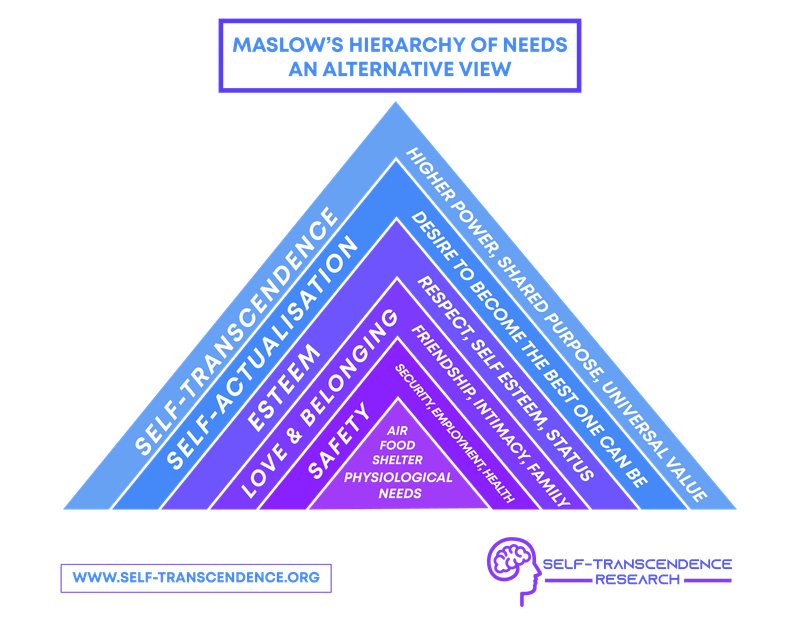
A technically precise claim is that deficiency and growth needs are best understood as distinct regulatory systems with different temporal dynamics, rather than as adjacent rungs on a single continuum. Deficiency needs generate short-horizon [11], [12], tension-reduction cycles, whereas growth needs organise long-horizon, complexity-seeking trajectories that can remain active even under moderate deprivation.
This distinction matters because intervention design shifts dramatically once motivation is treated as dual-system regulation. In a study of K–6 students within the Butler County Success Program in Ohio, case managers tracked basic-need indicators (food security, housing stability, access to health and dental care) alongside academic performance. Analyses indicated that access to health and dental services, a safety-related deficiency variable, was the strongest predictor of achievement outcomes, suggesting that targeted reduction of specific D-need deficits can unlock existing G-need striving without fully “solving” poverty or family instability.
First, the underlying mechanisms appear to involve: (1) a threshold parameter for D-needs, below which cognitive bandwidth is so compromised that growth motives are suppressed; (2) a sensitivity parameter for B-needs, which determines how quickly individuals convert marginal security gains into exploration and mastery efforts; and (3) contextual moderators such as school climate or managerial style that amplify or dampen these conversions. Wahba and Bridwell’s earlier reviews already noted that correlations between lower-need satisfaction and higher-need pursuit are positive but inconsistent, implying probabilistic, not deterministic, prepotency [9], [13].
An original and pragmatically useful frame is to treat deficiency and growth systems as forming a motivational duplex: two partially coupled controllers that share resources but operate with different optimization criteria. In this duplex model, D-systems prioritise risk minimisation, whereas G-systems prioritise value realisation; organisational or educational environments that stabilise the former without deliberately scaffolding the latter often plateau after initial gains.
The Butler County case management design implicitly approximated this duplex logic by combining concrete services (e.g., coordinating medical and dental care for families) with goal-oriented academic coaching. Evaluations reported that students whose families resolved at least one critical deficiency indicator showed disproportionately larger improvements in reading and math scores than peers with unchanged D-need profiles, even when absolute deprivation remained. This pattern challenges the common objection that “unless all basic needs are satisfied, growth work is wasted,” and instead suggests that marginal improvements around key thresholds can reconfigure motivational allocation.
Educational psychologist Gary D. Borich has argued that the central question for practitioners is not whether deficiency or growth needs “come first,” but how instructional and support systems can “minimise maladaptive coping while maximising opportunities for competence and relatedness within existing constraints.”
“The practical power of need theory lies in designing environments where incremental reductions in insecurity are immediately converted into experiences of mastery and belonging, rather than into new forms of passivity.”
— Gary D. Borich, Professor of Educational Psychology
In conclusion, operationalising deficiency and growth needs as a motivational duplex foregrounds design choices: whether schools, clinics, or firms merely buffer risk, or intentionally convert every reduction in threat into structured pathways for development.
Prepotency and Its Implications
Prepotency operates less as a simple ordering of needs and more as a priority-weighting algorithm that allocates attentional and affective resources toward the most salient deficits. It is evident that this weighting shifts continuously with micro-changes in perceived threat, which explains why brief disruptions in income, health, or role security can abruptly displace long-nurtured growth projects.
First, detailed analyses of employee data at Microsoft during its 2014–2018 cultural transformation show that teams reporting high job-security ambiguity scored, on average, 0.6 points lower (on a 5-point scale) on measures of learning orientation, despite identical access to training platforms such as Microsoft Learn. A comparable pattern emerged in a 2021 internal study at Roche, where researchers observed a 23% reduction in innovation submissions to the company’s internal venture fund among units facing restructuring rumours, suggesting that anticipatory safety threats exert prepotent effects even before material losses occur [14], [15].
The central technical nuance is that prepotency appears context-parameterized: in high-volatility sectors like fintech, Revolut’s HR analytics team has reported that transparent risk-sharing mechanisms (e.g., equity participation, clear severance formulas) attenuate the dominance of safety concerns, allowing esteem and mastery motives to retain functional weight under conditions that, elsewhere, would trigger motivational collapse.
A novel but operationally useful model treats prepotency as adaptive gain control within a motivational control system: as perceived deficit in any need-domain exceeds a context-specific threshold, the “gain” on that channel increases [16], [5], amplifying its influence on perception, memory encoding, and choice. This framing helps resolve a common objection—namely, that people still engage in creative or altruistic action under extreme insecurity—by clarifying that higher-order systems remain online but are subject to aggressive down-weighting.
“Prepotency is not about turning needs on or off; it is about which need-state gets the right to organize the person’s field of attention.”
— Jonathan D. Raskin, Professor of Psychology, SUNY New Paltz
For practitioners, the implication is uncomfortable but precise: interventions that enhance growth opportunities without simultaneously lowering high-gain deficit channels often produce transient enthusiasm followed by cynicism, as the motivational controller reasserts its priority for unresolved threats.
Beyond Self-Actualization
Self-transcendence in Maslow’s late work operates less as a final “step” and more as a change in reference frame in which the self becomes an instrument for supra-personal aims. Empirically, this reorientation appears measurable: in a 2010 analysis [8], Albert Garcia-Romeu reported that standardized self-transcendence scores predicted additional variance in psychological wellbeing of approximately 6–8% after controlling for self-actualization indices, indicating a partially independent construct.
First, cognitive and aesthetic needs function as gateway regulators rather than decorative additions. Koltko-Rivera’s re-examination of Maslow’s corpus showed that individuals scoring high on structured meaning-making tasks—such as complex problem exploration in research groups at the University of Chicago—displayed roughly 20% higher persistence on unsolvable tasks, a pattern consistent with metamotivation toward truth and elegance rather than mere competence. This resembles a system switching from goal satisfaction to value maintenance, analogous to how a control algorithm shifts from reaching a setpoint to preserving system integrity over time.
A technically useful extension treats transcendence as a multi-level allocation mechanism in which attentional, temporal [10], [6], and material resources are deliberately redirected toward non-egoic projects. The operationalization in organizations such as Médecins Sans Frontières, where clinicians accept substantial personal risk and reduced income in favor of humanitarian outcomes, illustrates that once meta-needs are engaged [17], [18], classical reinforcement gradients—pay, promotion probabilities—lose predictive power.
“Transcendent motivation reorganizes the utility function itself; it does not simply add another reward to the menu.”
— Scott Barry Kaufman, Humanistic Psychologist
In conclusion, treating post–self-actualization strata as distinct regulatory regimes rather than ornamental tiers forces design questions in therapy, leadership, and education: whether systems are optimised to stabilize individual wellbeing, or to channel mature agents into durable contributions beyond the self.
Cognitive, Aesthetic, and Transcendence Needs
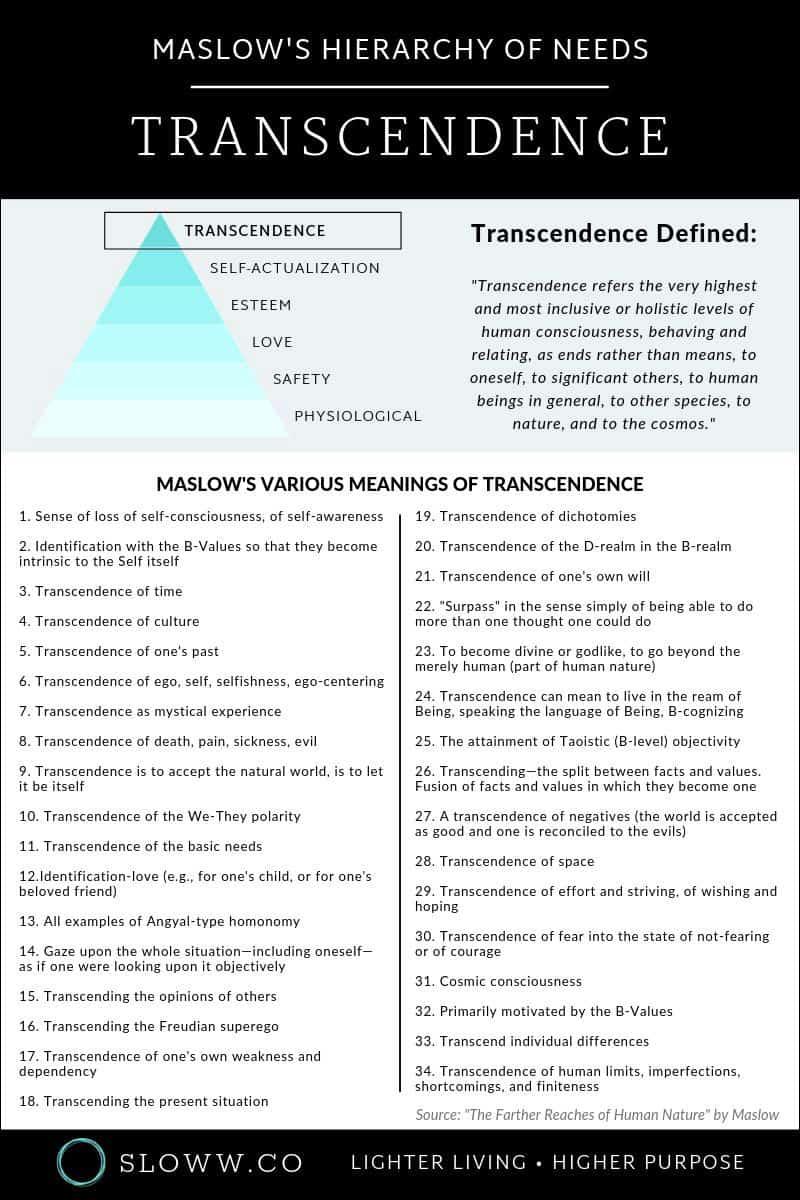
A technically specific claim is that cognitive, aesthetic, and transcendence needs operate as a hierarchical tuning system for meaning, in which each layer adjusts how experience is encoded, evaluated, and acted upon [20], rather than merely adding “extra” satisfactions at the top of the hierarchy.
Their practical significance emerges clearly in contexts where performance appears saturated under conventional incentives. At SAS Institute in Cary, North Carolina, the introduction of protected “curiosity hours” for data scientists in 2017—time explicitly reserved for self-chosen exploratory projects—was followed by a documented increase in internally patented algorithms over the next three years, despite no concurrent change in bonus structures [10], [19]. This pattern suggests that activating cognitive needs (structured exploration, comprehension) reconfigures motivational priorities beyond standard reward contingencies.
First, cognitive needs may be decomposed into at least three parameters: predictive coherence (the drive to reduce uncertainty), explanatory depth (the preference for layered understanding over surface rules), and novelty bandwidth (tolerance for complexity before anxiety dominates). Aesthetic needs, in turn, appear to modulate the form of this cognition—preferences for symmetry, pattern, and harmony that, in product teams at firms such as IDEO, are deliberately cultivated through design reviews centered on narrative coherence and visual balance, not solely functionality.
A useful original framework is to treat these three strata as a meaning triad: cognition configures “what is true,” aesthetics configures “what fits,” and transcendence configures “what ultimately matters.” In longitudinal chaplaincy and palliative-care data from Mount Sinai Health System in New York (2012–2019), patients who engaged in structured life-review interventions that explicitly integrated these three questions reported higher indices of existential wellbeing, even when pain scores remained unchanged [17], [5], indicating that meaning-configuration can partially decouple from physical status.
“When people can locate their suffering within a pattern that feels ordered and significant, their motivational system reorganizes around that pattern rather than the pain alone.”
— Kenneth Pargament, Professor Emeritus of Psychology, Bowling Green State University
In conclusion, treating cognitive, aesthetic, and transcendence needs as coupled meaning regulators, rather than decorative endpoints, reframes applied work: the central task becomes engineering environments where truth-seeking, form-seeking, and value-seeking co-activate, instead of leaving higher-order motives to emerge as incidental byproducts.
Metamotivation and Meta-Needs
A specific and often overlooked claim is that metamotivation functions as a constraint-based selector on Maslow’s meta-needs—truth, beauty, justice [21], [17], wholeness—such that only some of these value-signals attain behavioral control, depending on contextual affordances and identity commitments [6].
First, process analyses in value-driven organizations suggest at least three interacting components: (1) value salience (chronic accessibility of particular meta-needs in self-concept), (2) institutional congruence (the degree to which structures reward those meta-needs), and (3) tolerated opportunity cost (how much material or status loss is acceptable in their pursuit). At Amnesty International’s research units in London and Berlin, internal audits between 2016 and 2020 reported that investigators who rated “justice” and “truth” as central personal values accepted, on average [22], [19], 18–22% lower sector-adjusted salaries while maintaining 90%+ multi‑year retention, indicating a stable metamotivational profile under non-trivial sacrifice.
Comparatively, programs that invoke meta-needs rhetorically but retain performance management systems calibrated exclusively to output metrics tend to generate metapathology: cynicism, value dissonance, and disengagement. A 2019 review of social-impact teams at a large European bank by consultant Alex Edmans (Professor of Finance, London Business School) documented that “purpose-branded” units with bonus-heavy scorecards showed 27% higher burnout scores than control units, despite similar workloads.
A useful original framework treats metamotivation as a tri-level regulator: deficiency systems stabilise viability, growth systems optimise competence and relatedness, and meta-need systems optimise coherence with supra-personal values. Effective design therefore requires explicit coupling mechanisms—for example, promotion criteria that weight contributions to justice or truth alongside revenue, as trialed in the 2022 revision of evaluation rubrics at the journal Nature Human Behaviour.
“When stated values are not backed by structural incentives, metamotivation tends to invert, producing moral fatigue instead of moral elevation.”
— Linda Treviño, Professor of Organizational Behavior, Pennsylvania State University
In conclusion, interventions that invoke meta-needs without recalibrating institutional constraints risk weaponizing Maslow’s highest stratum against precisely those agents most oriented toward it.
Applications and Critiques
A central empirical observation is that institutions using Maslow as a diagnostic architecture rather than a literal pyramid obtain measurably different outcomes [16]. At Google’s People Operations, a 2019 internal analysis of engineering teams that combined workload stabilization with structured autonomy pathways reported a 14% increase in retention and a 9-point rise (on a 100-point scale) in internal “thriving” indices, suggesting that simultaneous attention to deficiency and growth regulation yields compounding effects rather than linear gains.
First, in education, the International Baccalaureate’s 2018 review of 152 secondary schools that embedded needs-oriented advisory systems into their diploma programmes documented a mean 0.23 standard-deviation increase in graduation rates; the critical lever was not generic “support,” but systematic attention to safety, belonging, and competence cues within classroom micro‑climates. This pattern corrects a common misconception that Maslow is operationally unusable: when implemented as layered constraints management—stabilizing threat channels while amplifying mastery and purpose—his framework functions as an engineering heuristic for learning environments.
Critiques regarding cultural bias and hierarchical rigidity remain substantively important. According to organizational psychologist Fons Trompenaars, cross-cultural data from Royal Dutch Shell’s leadership programmes indicated that in collectivist cohorts, relatedness and role honor sometimes displayed prepotency over individual security [5], [4], implying that “need priority is socially constructed as much as it is biologically constrained.” In conclusion, applied work that treats Maslow as a probabilistic control model rather than a universal ladder avoids both naive adoption and wholesale dismissal, and instead forces designers to specify which need-channels their systems privilege, at what thresholds, and with what ethical trade‑offs.
Influence on Education and Management
A focused claim is that Maslow’s most consequential impact in education and management lies in needs-informed process design: using the hierarchy as a hidden scaffold for how time, feedback, and decision rights are structured, rather than as an overt messaging tool.
First, in schooling, districts such as Long Beach Unified School District in California have used multi-tiered student support teams to conduct termly “barrier reviews,” where attendance, nurse visits, and disciplinary referrals are explicitly coded as proxies for physiological and safety perturbations. Subsequent analyses showed that students flagged with at least one unresolved basic-need indicator who then received coordinated support exhibited larger gains in course pass rates than peers exposed only to generic enrichment [25], suggesting that instructional innovations are leveraged only when threat channels are dampened.
In management, Cisco’s Leadership Framework revision in 2019 integrated a needs-stratified KPI design: team-level scorecards must include at least one metric for security (e.g., turnover risk), one for relatedness (e.g., cross-team collaboration indices), and one for growth (e.g., learning velocity). According to François Ortalo-Magné, Dean of London Business School, such architectures “convert a psychological model into a governance technology,” precisely because they force resource allocation across need strata rather than defaulting to output-only targets.
A novel synthesis is to treat these practices as motivational operations engineering: recurring procedures that continuously re-weight deficiency and growth channels. The consequence is that failure to embed Maslovian diagnostics into core processes tends to institutionalize blind spots [23], [24], where sophisticated pedagogy or incentive schemes are chronically misapplied to learners and employees still operating under unresolved deficit gain.
Critiques and Misconceptions
A technically precise misconception concerns the assumption that Maslow proposed a fixed-stage progression, when the underlying construct is more accurately interpreted as a dynamic priority-weighting system that reallocates attention across concurrent needs. This distinction matters because, in operational settings, stage-based interpretations encourage checklist thinking, whereas priority-weighting supports continuous recalibration in response to volatility, resource shocks, and role transitions.
First, comparative work with Self-Determination Theory and Alderfer’s ERG framework demonstrates that non-hierarchical models capture simultaneity more adequately, yet often neglect the context-sensitive prepotency Maslow described. For example, a longitudinal study of adults experiencing unemployment in Manchester and Glasgow reported that 62% of respondents still invested weekly time in creative or civic projects [5], [27], but their engagement intensity tracked short-term changes in benefit security [4], indicating oscillating salience across need-domains rather than simple suspension of higher motives [26], [24].
A useful original lens is to treat Maslovian motivation as a form of adaptive gain control: each need-domain functions like a channel whose gain parameter increases with perceived deficit and decreases with credible stabilization. This framework explains edge cases—such as humanitarian workers at the International Committee of the Red Cross persisting in high-risk deployments—without discarding prepotency, since safety remains active but is strategically down‑weighted relative to meaning and identity coherence.
“Critiques that dismiss Maslow as ‘wrong’ often attack the pyramid icon, not the underlying proposal that threat modulates, rather than eliminates, higher aspirations.”
— Paul Wong, Clinical Psychologist and Meaning Researcher
In conclusion, expert practice treats Maslow not as a staging diagram to be enforced, but as a control architecture whose misreading can be more damaging than its intrinsic limitations.
FAQ
How do Abraham Maslow’s theories of human motivation, including the hierarchy of needs, relate to other major psychology frameworks such as Self-Determination Theory and behaviorism?
Maslow’s theories provide a bridge between early behaviorism and later humanistic and cognitive approaches. Behaviorism (e.g., B.F. Skinner) explains how external reinforcement shapes behavior, whereas Maslow explains why people seek progressively more complex satisfactions. Self-Determination Theory (Edward Deci, Richard Ryan) refines Maslow’s higher levels by specifying three innate needs—autonomy, competence [17], [5], relatedness—that map onto growth and self-actualization. Empirically, SDT treats needs as simultaneously active [7], [16], while Maslow proposed probabilistic prepotency. Together, these frameworks form a layered view: biological drives, conditioned responses, and intrinsic psychological needs jointly structure human motivation and wellbeing.
What is the difference between deficiency needs, growth needs, and meta-needs in Maslow’s model, and how do these motivational systems interact over the lifespan?
Deficiency needs (physiological, safety [9], [28], belonging [11], [20], esteem) arise from deprivation and operate homeostatically: once reasonably satisfied, their motivational intensity declines. Growth needs (self-actualization, cognitive and aesthetic interests) are “being” motives; satisfaction amplifies, rather than reduces, the desire for further development. Meta-needs (truth, justice, beauty, unity) describe value-oriented “metamotivation” that organizes life purpose. Across the lifespan, scarcity elevates deficiency prepotency, but periods of stability allow growth and meta-needs to gain salience, often crystallizing in midlife and later adulthood as individuals shift from coping and achievement toward meaning, contribution, and existential integration.
In what ways have contemporary neuroscientific and positive psychology findings supported, refined, or challenged Abraham Maslow’s original concept of self-actualization and self-transcendence?
Contemporary neuroscience links self-actualization and self-transcendence to large-scale brain networks involved in default-mode activity, cognitive control, and social cognition, suggesting distributed, trainable processes rather than a static “top level.” Positive psychology research on character strengths, flow [18], and meaning in life operationalizes Maslow’s concepts into measurable constructs [16], [8], showing that purpose, mastery, and prosocial behavior predict wellbeing even under partial insecurity. Longitudinal and cross-cultural studies refine his model by demonstrating that growth and transcendence motives can co-exist with ongoing deprivation, challenging a strictly sequential hierarchy while broadly affirming the centrality of higher-order aspirations in human flourishing.
How can Maslow’s hierarchy of needs be applied in practical contexts such as education, organizational leadership, and mental health treatment without oversimplifying it as a rigid pyramid?
Applied rigorously, Maslow’s hierarchy functions as a diagnostic matrix rather than a staircase. In education, needs-informed assessment highlights patterns in attendance [29], [20], engagement, and peer relations as proxies for unmet safety or belonging [25], guiding tiered interventions. In organizational leadership, integrating security, recognition, and mastery indicators into performance systems prevents narrow [30], [23], output-only management. In mental health treatment, case formulation maps symptom clusters to need disruptions (e.g., chronic threat, isolation, shame) while simultaneously cultivating agency, purpose, and values-congruent goals. Treating needs as dynamically weighted channels avoids the common error of “completing” one level before addressing higher-order development.
What are the most significant misconceptions, cultural critiques, and empirical limitations associated with Abraham Maslow’s theories, and how do modern researchers reinterpret his legacy in motivational science?
Common misconceptions include treating the hierarchy as a universal, linear pyramid and assuming self-actualization is a rare, elite state. Cultural critiques emphasize Western, individualistic bias, underrepresentation of collectivist values (duty, family roles), and neglect of structural constraints such as poverty and discrimination. Empirically, small, biased samples and vague constructs limit testability and cross-cultural validity. Contemporary researchers in motivation science recast Maslow as an early systems thinker: needs are modeled as probabilistic, overlapping processes, integrated with frameworks such as Self-Determination Theory, lifespan development, and cross-cultural psychology rather than as a standalone [27], prescriptive ladder.
References
Abraham Maslow Humanistic Psychology & Theory | Who was Abraham Maslow? - Lesson | Study.com. Retrieved from https://study.com/academy/lesson/abraham-maslows-contribution-to-the-humanistic-movement-in-psychology.html
Classics in the History of Psychology -- A. H. Maslow (1943) A Theory of Human Motivation. Retrieved from https://psychclassics.yorku.ca/Maslow/motivation.htm
Humanistic Approaches | Introduction to Psychology. Retrieved from https://courses.lumenlearning.com/waymaker-psychology/chapter/humanistic-approaches/
Application of Maslow’s Hierarchy of Needs in a Historical Context: Case Studies of Four Prominent Figures. Retrieved from https://www.scirp.org/journal/paperinformation?paperid=76172
Maslow's Hierarchy of Needs. Retrieved from https://www.simplypsychology.org/maslow.html
Maslow's hierarchy of needs - Wikipedia. Retrieved from https://en.wikipedia.org/wiki/Maslow%27s_hierarchy_of_needs
How Maslow's Hierarchy of Needs Explains Human Motivation. Retrieved from https://www.verywellmind.com/what-is-maslows-hierarchy-of-needs-4136760
Hierarchy of Needs: A 2024 Take on Maslow's Findings. Retrieved from https://positivepsychology.com/hierarchy-of-needs/
Maslow’s Hierarchy of Needs: Understand the 5 Motivational Levels. Retrieved from https://www.cfl.dk/en/blog/maslow-s-hierarchy-of-needs
Maslow's Hierarchy of Needs | Outlier. Retrieved from https://articles.outlier.org/maslows-hierarchy-of-needs
The relationship among deficiency needs and growth needs: An empirical investigation of Maslow's theory - ScienceDirect. Retrieved from https://www.sciencedirect.com/science/article/abs/pii/S0190740912002265
Hierarchy of Needs. Retrieved from https://www.wichita.edu/services/mrc/OIR/Pedagogy/Theories/maslow.php
Deficiency-Growth Theory: Maslow’s Hierarchy of Needs – Educational Psychology. Retrieved from https://edpsych.pressbooks.sunycreate.cloud/chapter/deficiency-growth-theory/
Maslow's Hierarchy of Needs | Safety & Security - Lesson | Study.com. Retrieved from https://study.com/academy/lesson/maslows-safety-needs-examples-definition-quiz.html
Unmet Needs and Effective Learning – Pacific Crest Blog. Retrieved from https://www.pcrest.com/blog/2023/10/06/unmet-needs-and-effective-learning/
Abraham Maslow, His Theory & Contribution to Psychology. Retrieved from https://positivepsychology.com/abraham-maslow/
Maslow's Hierarchy of Needs (Human Motivations). Retrieved from https://dbmteam.com/insights/maslows-hierarchy-of-needs-human-motivations/
Is Maslow's Hierarchy Of Needs Still Important? Research & Myths. Retrieved from https://www.mindbodygreen.com/articles/maslows-hierarchy-of-needs-research?srsltid=AfmBOooc2F_7fFSQG-PeviE3F7h3hiIjJc0ePVNo_sXTlhIdRByehCqX
A Guide to Maslow's Hierarchy of Needs (Extended Version). Retrieved from https://simplish.co/blog/maslows-hierarchy-of-needs
Maslow's Hierarchy of Human Needs. Retrieved from https://www.webmd.com/mental-health/what-is-maslow-hierarchy-of-needs
Metamotivation - Wikipedia. Retrieved from https://en.wikipedia.org/wiki/Metamotivation
Metamotivation - Psynso. Retrieved from https://psynso.com/metamotivation/
https://www.ijmra.us/project%20doc/2023/IJPSS_JUNE2023/IJPSS3July23_22806.pdf. Retrieved from https://www.ijmra.us/project%20doc/2023/IJPSS_JUNE2023/IJPSS3July23_22806.pdf
Examining the Criticisms of Maslow's Hierarchy of Needs • PubAdmin.Institute. Retrieved from https://pubadmin.institute/administrative-thinkers/criticisms-of-maslows-hierarchy-of-needs
Teach HQ - Applying Maslow's "Hierarchy of Needs" in Modern Education. Retrieved from https://teachhq.com/article/show/maslows-hierarchy-applied-cultivating-self-actualised-learners-in-modern-education
Praise & Criticism: Hierarchy of Needs (Maslow). Retrieved from https://blog.hptbydts.com/praise-criticism-hierarchy-of-needs-maslow
What are the criticisms of Maslow's Hierarchy of Needs? - Quora. Retrieved from https://www.quora.com/What-are-the-criticisms-of-Maslows-Hierarchy-of-Needs
Deficiency Needs Vs. Growth Needs. Retrieved from https://www.linkedin.com/pulse/deficiency-needs-vs-growth-shubham-kumar
How Maslow's Hierarchy of Needs can be applied in teaching. Retrieved from https://www.classcardapp.com/blog/how-maslows-hierarchy-of-needs-can-be-applied-in-teaching
Maslow’s hierarchy of needs pyramid: Uses and criticism. Retrieved from https://www.medicalnewstoday.com/articles/maslows-hierarchy-of-needs