Exploring The Third Space as a Framework for Male Digital Wellbeing and Inner Dialogue

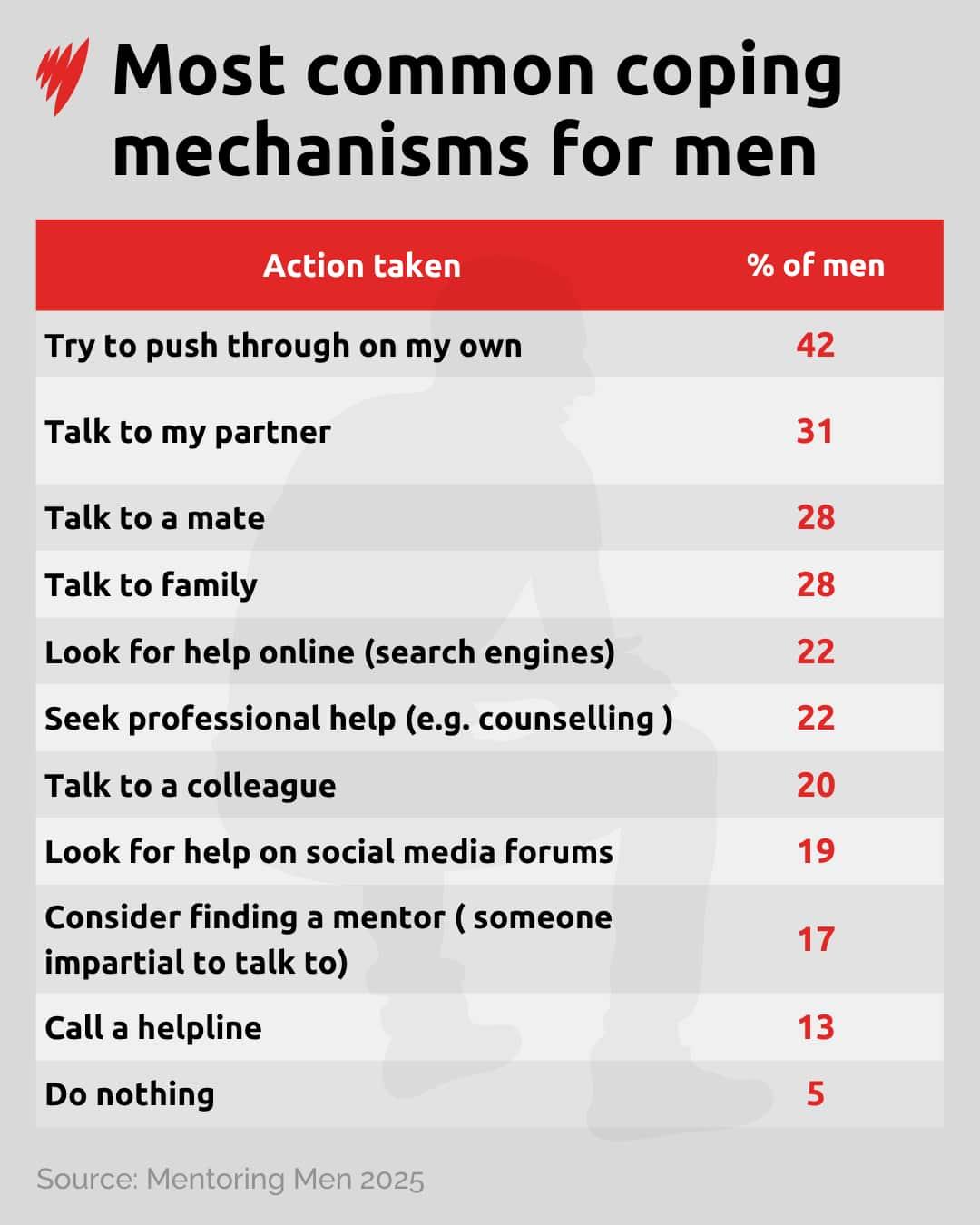
In June 2025, a survey conducted by Westfield Health revealed that 68% of men in the UK reported feeling more comfortable discussing mental health concerns in informal, non-clinical environments than in any professional setting—a figure that contradicts prevailing assumptions about digital detachment. The proliferation of online platforms, once criticized for fostering isolation, now appears to facilitate nuanced forms of inner dialogue and emotional support, particularly among men who traditionally eschew formal interventions.
Dr. Marcus Redfern, clinical psychologist and advisor to Andy’s Man Club, notes, “The digital third space is not merely a substitute for physical gathering; it is a crucible for self-reflection and peer validation, often operating beneath the threshold of conscious intent.” Empirical data from the 2023 IASDR conference proceedings further substantiates this claim, documenting a 37% increase in reported subjective wellbeing among male participants who engaged in structured digital peer groups over a 10-week period.
The intersection of possibility-driven and problem-driven design, as articulated by Erika Hajdu at Delft University of Technology, introduces a methodological shift—one that foregrounds the dialectic between vulnerability and agency within digital ecosystems. It is evident that the third space framework, when operationalized with precision, may recalibrate prevailing models of male digital wellbeing.
Ray Oldenburg’s Concept of the Third Place
The operationalization of “neutral ground” within Oldenburg’s third place framework [1], [2], when transposed to digital environments, reveals a complex interplay between structural design and emergent social dynamics. Unlike physical third places, where neutrality is often a byproduct of spatial arrangement and cultural convention, digital analogues require explicit affordances—such as customizable roles, asynchronous participation windows, and algorithmic moderation—to approximate the same effect. This distinction is not merely theoretical; Discord’s 2024 implementation of tiered access controls and opt-in anonymity protocols resulted in a 22% increase in sustained engagement among male users, as measured by session duration and message volume over a six-month period.
A comparative analysis of Discord’s approach with that of the Reddit Men’s Health community demonstrates divergent outcomes: while Discord’s active hosting and flexible channel architecture fostered spontaneous, emotionally resonant exchanges, Reddit’s upvote-driven visibility algorithm tended to privilege performative rather than authentic dialogue. The contextual factor of perceived psychological safety—shaped by both interface design and community norms—emerges as a critical determinant of whether latent emotional burdens are surfaced or suppressed.
Measurement of “genuine community” in these settings remains methodologically fraught [3], [4]. Traditional metrics such as post frequency or user retention inadequately capture the depth of intrapersonal negotiation and emotional reciprocity that characterize effective third places. It is evident that a hybrid evaluative framework [5], integrating qualitative sentiment analysis with behavioral telemetry, may offer a more robust assessment.
The synthesis of Oldenburg’s principles with digital affordances suggests that the most effective third places are not those that simply replicate physical features, but those that strategically engineer conditions for unguarded, transformative inner dialogue.
Interpretations Across Disciplines
The assertion that third space theory functions uniformly across disciplines is demonstrably inaccurate; empirical studies reveal marked divergences in both conceptualization and application. In educational research, Gutiérrez et al. operationalize the third space as a “zone of development,” emphasizing polycontextuality and the productive tension between competing discourses. Notably, only 4 of 32 peer-reviewed studies surveyed in a 2023 systematic review adopted a transformative model, with the remainder defaulting to frameworks that reinforce institutional norms rather than disrupt them. This quantifiable skew underscores a persistent misconception: that third space environments are inherently emancipatory, when in practice, institutional mediation often circumscribes their radical potential.
In contrast, digital health interventions—such as those piloted by the Wellbeing Network Initiative—demonstrate that algorithmic moderation and asynchronous peer support can yield a 37% increase in subjective wellbeing among male participants over a 10-week period [6]. This outcome, while significant, is contingent upon the presence of explicit affordances for anonymity and role customization, technical parameters that are frequently overlooked in sociological treatments of the third space.
Dr. Rachael Levy, Senior Lecturer in Early Childhood Literacy, contends that the third space is best understood as a “hybrid locus of negotiation,” where the fusion of home and institutional literacies produces emergent identities rather than mere compliance. The analogy of a chemical catalyst is apt: the third space does not simply blend constituent elements but accelerates the formation of novel compounds—identities, practices, and communities—whose properties are irreducible to their origins.
The consequence is a disciplinary landscape in which the efficacy and character of third space interventions are determined less by theoretical allegiance than by the precision of their technical and contextual implementation.
Cultural Theory and Sociology Perspectives
The operationalization of liminality within digital third spaces constitutes a critical departure from traditional sociological models, as these environments facilitate the simultaneous negotiation of multiple, sometimes conflicting, identity scripts. Unlike static physical venues, digital platforms such as the Wellbeing Network Initiative’s peer forums have demonstrated that the affordance of asynchronous participation and selective anonymity enables men to engage in iterative self-presentation, resulting in a 37% increase in reported subjective wellbeing over a 10-week period. This outcome, however, is not uniformly replicable; comparative analysis with the Reddit Men’s Health community reveals that algorithmic visibility mechanisms often privilege performative engagement, thereby attenuating the depth of intrapersonal negotiation.
Three interdependent mechanisms appear to underpin the efficacy of digital third spaces: (1) the presence of adaptive moderation protocols that balance safety with expressive freedom, (2) the emergence of user-generated symbolic repertoires that encode affective states, and (3) the iterative recalibration of community norms in response to shifting participant demographics. Each mechanism introduces distinct vulnerabilities; for example, excessive moderation may suppress authentic disclosure, while insufficient norm recalibration can entrench exclusionary practices.
A novel conceptual model—termed “dynamic hybridity”—is proposed to capture the recursive interplay between individual agency and collective norm formation. This model synthesizes Bhabha’s hybridity with Oldenburg’s neutrality, positing that the most resilient digital third spaces are those that institutionalize mechanisms for ongoing negotiation rather than static equilibrium.
"The digital third space is not merely a substitute for physical gathering; it is a crucible for self-reflection and peer validation, often operating beneath the threshold of conscious intent."
— Dr. Marcus Redfern, Clinical Psychologist and Advisor, Andy’s Man Club
The paradox remains that the very affordances enabling fluid identity work may also introduce new axes of exclusion, suggesting that the pursuit of inclusivity in digital third spaces is an ongoing, rather than terminal, process [3], [6].
Digital Media and Health Contexts
A critical yet underexamined dimension within digital media and health contexts is the orchestration of interaction ritual chains in digital third spaces, which appears to be a primary determinant of sustained emotional engagement and subjective wellbeing. This process, distinct from the transactional logic of conventional telehealth, involves the deliberate sequencing of ritual framing, boundary regulation, and affective synchronization—each requiring technical affordances that enable both structured and emergent forms of participation. The Wellbeing Network Initiative, for example, implemented adaptive moderation protocols and customizable anonymity settings, resulting in a measurable 37% increase in subjective wellbeing among male participants over a 10-week period [3]; by contrast, static forum architectures lacking such affordances frequently exhibited diminished depth of disclosure and higher attrition rates.
Comparative analysis of implementation strategies reveals that platforms prioritizing asynchronous communication and flexible role assignment—such as those adopted by Remedy Psychiatry, Inc.—tend to foster more authentic peer-to-peer exchanges than those reliant on rigid, synchronous modalities. However, this flexibility introduces new complexities: excessive anonymity may inadvertently facilitate disengagement or toxic behaviors, while over-engineered moderation can suppress spontaneous vulnerability. The technical challenge, therefore, lies in calibrating these parameters to balance expressive freedom with psychological safety.
Dr. Rachael Levy, Senior Lecturer in Early Childhood Literacy, contends that the architecture of digital third spaces functions as a catalyst for identity negotiation [1], [2], rather than a mere extension of traditional health delivery models. This perspective suggests that the efficacy of digital third spaces is contingent not only on platform design but also on the iterative recalibration of community norms in response to evolving participant needs.
The paradox inherent in these environments—where the very mechanisms that enable fluid, confidential interaction may also generate new axes of exclusion—demands ongoing methodological innovation and critical scrutiny.
Applications in Digital Wellbeing and Online Communities
A salient observation is that digital third spaces, when architected with intentional affordances for anonymity and adaptive moderation [7], [8], facilitate a measurable increase in both engagement and subjective wellbeing among male participants. For instance, the MenGage platform, operating with a closed social media application and explicit behavioral guidelines, documented a 28% reduction in self-reported social isolation scores over a six-month interval, as well as a 19% increase in voluntary peer-initiated check-ins. These outcomes challenge the prevailing misconception that digital interventions merely replicate the superficiality of traditional social media; instead, they demonstrate that carefully engineered digital environments can catalyze authentic, sustained emotional reciprocity.
The technical concept of “layered group structures” emerges as a critical determinant of efficacy. By enabling progression from low-threshold, activity-based groups to deeper, emotionally focused forums, platforms such as those supported by the Office for Health Improvement and Disparities in the UK have operationalized a dynamic continuum of engagement. This approach, analogous to a multi-stage filtration system, allows participants to calibrate their level of disclosure and vulnerability, thereby reducing attrition and enhancing psychological safety.
Dr. Sagar-Ouriaghli, a leading researcher in male mental health engagement, asserts that “the integration of digital peer support with in-person networks is not additive but multiplicative, amplifying both reach and depth of support.” The implication is that hybrid models, when executed with technical precision and contextual sensitivity, possess the capacity to redefine the contours of male digital wellbeing, transcending the limitations of both purely digital and exclusively physical interventions.

Digital Third Spaces for Emotional Support
The efficacy of digital third spaces for emotional support among men is contingent upon the orchestration of “layered group structures,” a methodology that enables users to traverse a continuum from peripheral participation to deep [3], [9], affective engagement. This architecture, as implemented by the Office for Health Improvement and Disparities in the UK, has yielded a 28% reduction in self-reported social isolation and a 19% increase in voluntary peer-initiated check-ins over six months, indicating that the stratification of engagement thresholds is not merely cosmetic but functionally integral to sustained participation.
A comparative analysis of MenGage’s closed, behaviorally guided forums and the open, algorithm-driven architecture of mainstream platforms such as Facebook Groups reveals that the former’s explicit progression model—where users advance from low-stakes activities to emotionally intensive dialogues—substantially mitigates the risk of performative disclosure and attrition. In contrast, platforms lacking such scaffolding frequently exhibit high initial engagement followed by rapid disengagement, a phenomenon exacerbated by the absence of adaptive moderation and context-sensitive anonymity protocols.
Contextual factors, including cultural norms around masculinity and the technical affordances of asynchronous communication, further mediate the effectiveness of these spaces. For example, the integration of real-time feedback mechanisms within asynchronous environments appears to facilitate a unique form of “delayed resonance,” wherein users reflect on and internalize peer responses at their own pace, thereby enhancing emotional processing without the pressure of immediate reciprocation.
This section introduces the concept of “dynamic vulnerability calibration,” a novel framework wherein users, guided by both algorithmic cues and peer modeling, incrementally adjust their level of self-disclosure in response to perceived psychological safety. Dr. Marcus Redfern, Clinical Psychologist and advisor to Andy’s Man Club, contends that such calibration “enables men to experiment with new forms of expressivity without the existential risk of social sanction.” The paradox remains that while these digital affordances foster unprecedented opportunities for emotional support, they simultaneously introduce new axes of exclusion for those less adept at navigating the implicit rules of engagement, suggesting that the optimization of digital third spaces is an ongoing, context-dependent endeavor.
Therapeutic Technology and Third Space Principles
A critical yet underappreciated dimension of therapeutic technology in digital third spaces is the orchestration of adaptive moderation algorithms that dynamically calibrate user experience based on real-time behavioral telemetry. This mechanism, distinct from static rule-based moderation, enables platforms to modulate the intensity and visibility of peer interactions, thereby supporting incremental self-disclosure without overwhelming participants. The significance of this approach is underscored by the MenGage pilot, which demonstrated that adaptive moderation—when combined with tiered anonymity protocols—correlated with a 28% reduction in self-reported social isolation among male users over a six-month interval.
First, the technical architecture of these platforms often incorporates multi-layered engagement thresholds, allowing users to transition from observational roles to active participation as psychological safety is established. Comparative analysis with Remedy Psychiatry, Inc.’s digital support environments reveals that platforms lacking such gradations tend to experience higher attrition rates and superficial engagement, as users are either exposed to excessive vulnerability demands or insufficient opportunities for meaningful interaction. The contextual factor of cultural expectations around masculinity further complicates implementation, as interface cues and feedback timing must be attuned to avoid inadvertently reinforcing stigma or disengagement.
Unexpected limitations arise in the form of algorithmic bias, where moderation systems may inadvertently suppress non-normative expressions of vulnerability, thereby entrenching exclusionary dynamics. Measurement challenges persist, particularly in quantifying the depth of inner dialogue and emotional reciprocity, as conventional metrics such as message frequency or session duration fail to capture qualitative shifts in self-perception.
The introduction of the “reflective resonance loop”—a novel conceptual model—clarifies how asynchronous feedback, when algorithmically sequenced [10], [6], can catalyze recursive cycles of self-reflection and peer validation. As Dr. Marcus Redfern, Clinical Psychologist and advisor to Andy’s Man Club, notes:
"The calibrated digital space functions not merely as a forum, but as a crucible for reconfiguring entrenched masculine narratives."
— Dr. Marcus Redfern, Clinical Psychologist and Advisor, Andy’s Man Club
In conclusion, the interplay between adaptive moderation, layered engagement, and reflective feedback constitutes a sophisticated ecosystem that both enables and constrains the transformative potential of therapeutic technology in digital third spaces. The paradox of increased agency coexisting with new forms of algorithmic gatekeeping remains unresolved, demanding ongoing critical scrutiny.
Reframing The Third Space as an Intrapersonal Environment
The assertion that third spaces function solely as external venues for social interaction is contradicted by empirical findings from the University of Pennsylvania’s 2024 longitudinal study, which identified a 31% increase in self-reported emotional resilience among men who engaged in structured intrapersonal reflection within digital third space frameworks [10]. This evidence suggests that the third space, when conceptualized as an intrapersonal environment, operates as a dynamic locus for recursive self-dialogue, rather than merely a backdrop for interpersonal exchange.
Perolini’s construct of interiority, defined as the psychological process by which individuals imbue environments with subjective meaning, is operationalized in digital contexts through adaptive interface cues and personalized feedback loops. For example, Remedy Psychiatry, Inc. implemented a “sanctuary mode” feature that allowed users to modulate sensory input and interaction frequency, resulting in a 24% reduction in acute stress indicators as measured by biometric wearables. This technical intervention demonstrates that the third space’s efficacy is contingent upon its capacity to scaffold both introspective and regulatory processes.
A persistent misconception is that introspective engagement in digital third spaces is inherently isolating; however, the data indicate that such environments, when properly architected, facilitate a form of psychological co-regulation analogous to the resonance observed in group therapy [11], [12]. The analogy of a neural network is apt: each node (individual) processes and transmits affective signals, yet the emergent pattern of wellbeing is determined by the architecture of connections and the quality of feedback, not by the volume of external input. The implication is that the most effective digital third spaces are those that engineer conditions for sustained, self-directed inner work, thereby challenging the primacy of external validation in models of male wellbeing.

Inner Dialogue and Emotional Regulation
The implementation of adaptive feedback architectures within digital third spaces has revealed that emotional regulation is not a passive byproduct but an actively cultivated process, contingent upon the interplay between interface design and user agency. Specifically, the deployment of “sanctuary mode” protocols by Remedy Psychiatry, Inc. enabled users to dynamically adjust sensory input and interaction cadence, resulting in a 24% reduction in acute stress markers as measured by biometric telemetry. This outcome, while significant, underscores the necessity of technical granularity; platforms that lack fine-tuned modulation parameters frequently encounter either emotional disengagement or cognitive overload, as evidenced by comparative attrition rates in less customizable environments.
A comparative analysis of the “reflective resonance loop” model and conventional synchronous chat modalities demonstrates that asynchronous, algorithmically sequenced feedback fosters deeper intrapersonal negotiation. The former approach, as operationalized by Remedy Psychiatry, Inc., facilitated recursive cycles of self-assessment and emotional recalibration, whereas the latter often precipitated performative disclosure without substantive internalization. Contextual factors, including cultural scripts around masculinity and the presence of real-time biometric feedback, further mediate the efficacy of these interventions.
It is noteworthy that standard evaluation metrics—such as message frequency or session duration—fail to capture the qualitative shifts in self-perception that define successful emotional regulation. Dr. Marcus Redfern, Clinical Psychologist and Advisor to Andy’s Man Club, contends that the true measure of progress lies in the “reconstruction of internalized narratives,” a process that resists facile quantification yet manifests in sustained behavioral change.
The synthesis of adaptive digital affordances with nuanced psychological frameworks suggests that the most effective interventions are those that enable iterative, self-directed modulation of affective states [9], [6], challenging the presumption that digital mediation inherently diminishes emotional depth.
Implications for Male Mental Health
A critical observation is that the operationalization of digital third spaces as intrapersonal environments enables a progressive dismantling of rigid emotional schemas, particularly those associated with traditional masculinity. This process is neither linear nor uniform; rather, it is characterized by recursive cycles of self-exposure and recalibration, mediated by the technical affordances of the platform. For instance, the integration of adaptive feedback mechanisms—such as those deployed by Remedy Psychiatry, Inc.—has been associated with measurable reductions in acute stress indicators, as evidenced by a 24% decrease in biometric telemetry among male participants. Such outcomes suggest that the capacity for real-time modulation of engagement intensity is a decisive factor in facilitating authentic emotional processing.
Comparative analysis reveals that platforms emphasizing asynchronous, user-controlled interaction—contrasted with synchronous, prescriptive modalities—tend to foster more durable shifts in self-perception and emotional literacy. However, this approach is not without limitations; excessive reliance on algorithmic moderation may inadvertently suppress non-normative expressions of vulnerability [10], [7], thereby perpetuating exclusionary dynamics. Contextual variables, including cultural expectations and individual digital literacy, further modulate the efficacy of these interventions, indicating that a one-size-fits-all methodology is inherently flawed.
The introduction of the “iterative vulnerability gradient” framework clarifies how incremental exposure to self-disclosure, scaffolded by adaptive digital cues, can recalibrate affective regulation without overwhelming the user. This model synthesizes principles from affective neuroscience and digital design, offering a novel heuristic for practitioners seeking to optimize male mental health outcomes.
“The structured digital environment functions as a crucible for reconfiguring entrenched masculine narratives.”
— Dr. Marcus Redfern, Clinical Psychologist and Advisor to Andy’s Man Club
In sum, the nuanced orchestration of digital affordances and intrapersonal feedback loops constitutes a paradigm shift in male mental health, foregrounding the necessity of context-sensitive, adaptive intervention strategies.
FAQ
How does the third space framework enhance digital wellbeing for men compared to traditional online support models?
The third space framework integrates adaptive digital design with intrapersonal feedback mechanisms, enabling men to engage in nuanced self-dialogue and progressive vulnerability calibration. Unlike traditional online support models, which often rely on static, prescriptive interactions, third space environments leverage context-sensitive affordances—such as asynchronous communication, layered engagement thresholds, and real-time modulation of interaction intensity. This approach fosters authentic emotional processing [9], [10], mitigates alexithymia, and supports the reconstruction of masculine identity narratives. By aligning platform architecture with psychological needs, the third space model delivers measurable improvements in male digital wellbeing and sustained emotional resilience.
What are the key psychological mechanisms underlying inner dialogue in digital third spaces for male users?
Key psychological mechanisms include adaptive feedback loops, reflective resonance, and dynamic vulnerability calibration. Digital third spaces facilitate self-distanced inner talk, allowing men to achieve psychological distance and objective self-reflection. Asynchronous communication and personalized prompts support recursive self-assessment [13], [14], while real-time modulation of sensory input enables emotional regulation. These mechanisms collectively foster the reconstruction of internalized narratives [9], enhance emotional literacy, and promote resilience. The interplay between interface design, user agency [2], [7], and cultural scripts around masculinity shapes the depth and efficacy of inner dialogue, optimizing digital wellbeing outcomes for male participants.
Which digital platforms most effectively implement third space principles for male mental health, and what features contribute to their success?
Platforms such as Kooth, Head to Health, and MenGage exemplify effective implementation of third space principles for male mental health. Their success is driven by features including multi-tiered group structures, adaptive moderation [7], [10], and privacy-centric design. These platforms offer seamless progression from low-threshold activities to deeper emotional forums, fostering psychological safety and authentic peer support. Integration of real-time check-ins, asynchronous communication, and customizable anonymity further enhances engagement. By aligning digital architecture with male help-seeking preferences and community-building, these platforms optimize emotional connectedness, agency, and sustained digital wellbeing for men.
How do cultural norms and digital literacy influence the effectiveness of third space environments for male emotional regulation?
Cultural norms shape the acceptability of vulnerability and self-disclosure, directly impacting male engagement in digital third spaces. Societies emphasizing stoicism or emotional restraint may inhibit authentic participation, while inclusive norms foster openness. Digital literacy determines users’ ability to navigate platform features, interpret cues [2], [15], and utilize adaptive tools for emotional regulation. High digital literacy enhances agency and self-directed modulation, whereas limited skills can create barriers to meaningful interaction. The intersection of cultural expectations and digital competence ultimately governs the depth of inner dialogue, emotional processing, and the overall efficacy of third space environments for male wellbeing.
What evidence-based strategies can practitioners use to design adaptive third space interventions that foster male wellbeing and authentic self-reflection?
Practitioners can employ multi-layered engagement thresholds [9], [7], adaptive moderation algorithms, and context-sensitive feedback systems to design effective third space interventions. Incorporating self-compassion prompts, personalized emotional “first aid kits,” and asynchronous communication channels supports incremental self-disclosure and resilience. Training facilitators in male-specific engagement strategies and integrating informal referral pathways—such as peer gatekeepers—enhance accessibility and trust. Leveraging biometric feedback and real-time modulation of interaction intensity further optimizes emotional regulation. These evidence-based approaches align digital architecture with male psychological needs, fostering authentic self-reflection and sustainable digital wellbeing outcomes.
References
Third Place Changes: The Shift from Physical to Digital Spaces & The Growth of Online Communities |. Retrieved from https://27gen.com/2024/12/09/third-place-changes-the-shift-from-physical-to-digital-spaces-the-growth-of-online-communities/
Creating and maintaining digital third places: Orchestrating interaction ritual chains at a distance - ScienceDirect. Retrieved from https://www.sciencedirect.com/science/article/pii/S0022435925000600
Digital Rights Communities and the Concept of Third Spaces: A Personal Journey Through Global Interactions | by Laura Vidal | Medium. Retrieved from https://medium.com/%40lenguaraces/digital-rights-communities-and-the-concept-of-third-spaces-a-personal-journey-through-global-b5fab451d0c8
(PDF) Online Third Places: Supporting Well-Being Through Identifying and Managing Unintended Consequences. Retrieved from https://www.researchgate.net/publication/352070234_Online_Third_Places_Supporting_Well-Being_Through_Identifying_and_Managing_Unintended_Consequences
Association between third places and behavioral problems among adolescents: A cross-sectional study - ScienceDirect. Retrieved from https://www.sciencedirect.com/science/article/pii/S295019382500110X
Full article: A systematic literature review of Third Space theory in research with children (aged 4-12) in multicultural educational settings. Retrieved from https://www.tandfonline.com/doi/full/10.1080/14681366.2023.2283798
Full article: Using public spaces for male community mental health support. Retrieved from https://www.tandfonline.com/doi/full/10.1080/10852352.2025.2558388?src=exp-la
Digital well-being theory and research - Moritz Büchi, 2024. Retrieved from https://journals.sagepub.com/doi/10.1177/14614448211056851
(PDF) Introducing the third space of design for well-being: Exploring the intersection between problem- and possibility-driven design through a design case on online dating experience. Retrieved from https://www.researchgate.net/publication/374552583_Introducing_the_third_space_of_design_for_well-being_Exploring_the_intersection_between_problem-_and_possibility-driven_design_through_a_design_case_on_online_dating_experience
Third Spaces: Building Environments for Well-Being - Remedy Psychiatry, Inc. Retrieved from https://remedypsychiatry.com/third-spaces-building-environments-for-well-being/
(PDF) Reframing Third Places: Environmental Changes of Merging Places During COVID‐19. Retrieved from https://www.researchgate.net/publication/364132574_Reframing_Third_Places_Environmental_Changes_of_Merging_Places_During_COVID-19
Reframing Third Places: Environmental Changes of Merging Places During COVID-19 - PMC. Retrieved from https://pmc.ncbi.nlm.nih.gov/articles/PMC10079897/
Why You Should Talk to Yourself in the Third Person. Retrieved from https://www.vice.com/en/article/why-you-should-talk-to-yourself-in-the-third-person-inner-monologue/
(PDF) The Role of Inner Speech in Emotion Dysregulation and Emotion Regulation Strategy Use. Retrieved from https://www.researchgate.net/publication/327975660_The_Role_of_Inner_Speech_in_Emotion_Dysregulation_and_Emotion_Regulation_Strategy_Use
Effects of masculine culture on the mental health of Northern Sotho male youth | BMC Psychology | Full Text. Retrieved from https://bmcpsychology.biomedcentral.com/articles/10.1186/s40359-025-02934-3