Male Work, Money, and Purpose: Balancing Identity and Financial Pressures
In 2023, a Pew Research Center study revealed that 57% of American men aged 18 to 49 felt their primary value to society was tied to their ability to provide financially—a figure that has remained stubbornly consistent for over two decades. This enduring belief persists despite seismic shifts in the labor market, where automation and gig work have eroded traditional career paths, and dual-income households have become the norm.
The cultural script that equates masculinity with financial dominance is not merely outdated—it is actively harmful. Sociologist Michael Kimmel, in his seminal work Guyland, argued that the relentless pressure to "perform" as breadwinners leaves men vulnerable to identity crises when economic realities fail to align with these expectations.
Recent research from the University of Michigan (2024) underscores this tension, showing that men in precarious employment are 40% more likely to report feelings of inadequacy and depression compared to their securely employed counterparts. These findings highlight a stark reality: the intersection of work, money, and purpose is not just a personal struggle but a societal reckoning.

The Breadwinner Model: Origins and Evolution
The male breadwinner model, rooted in 19th-century England, emerged as a response to industrialization's restructuring of labor and family dynamics. This framework, which positioned men as primary earners and women as dependents, was not merely a cultural shift but a calculated economic strategy. Trade unions, for instance, actively lobbied for "family wages," leveraging institutional power to exclude women and children from the workforce. This exclusion was justified by the claim that men required higher wages to support their families, embedding gendered economic roles into labor policies.
A critical yet often overlooked mechanism behind the model's entrenchment was the interplay between labor legislation and societal norms. Laws restricting women's work hours, such as the Factory Acts in Britain [1], [2], were framed as protective but effectively curtailed women's economic independence [3], [4]. Simultaneously, societal narratives glorified male provision, equating financial dominance with moral and social superiority. This duality reinforced a system where economic value was synonymous with masculinity.
"The male breadwinner model was not an organic evolution but a deliberate construct shaped by economic and institutional forces."
— Karen Offen, Historian, Stanford University
However, this model's rigidity revealed its limitations during economic crises, where reliance on a single income proved unsustainable. By examining its historical underpinnings, we uncover a cautionary tale: economic systems that marginalize diversity in labor contributions risk perpetuating inequality and fragility.
Cultural Expectations and Masculine Identity
Cultural expectations surrounding masculinity often operate as invisible forces [6], [7], shaping identity through deeply ingrained societal norms. One critical yet underexplored dynamic is the tension between traditional masculine ideals and the evolving nature of work. While the breadwinner model has waned in explicit dominance [5], [2], its psychological imprint persists, particularly in how men equate self-worth with economic contribution. This internalized standard creates a paradox: even in dual-income households, men frequently feel compelled to outperform their partners financially, often at the expense of emotional well-being [1].
A nuanced mechanism driving this phenomenon is the interplay between societal validation and personal identity. Research highlights that men in roles perceived as "non-masculine" or caregiving often experience diminished social status, even when these roles are essential. For instance, a 2024 study by the University of Michigan found that men in caregiving professions reported higher rates of anxiety due to societal stigmatization, despite their critical contributions.
"Masculinity is a performance, and the pressure to perform as the provider can be both motivating and debilitating."
— Michael Kimmel, Sociologist
To address this, organizations must foster environments that redefine success beyond financial metrics. By valuing emotional intelligence and caregiving equally, we can dismantle outdated norms and promote a more inclusive understanding of masculinity—one that aligns identity with diverse contributions rather than rigid expectations.
Financial Pressures and Their Impact on Men's Mental Health
The intersection of financial pressures and mental health reveals a stark reality: economic instability disproportionately affects men due to entrenched societal expectations. A 2023 study by the American Psychological Association found that men experiencing job insecurity were 35% more likely to report symptoms of severe anxiety compared to their securely employed counterparts [8]. This heightened vulnerability stems from the internalized belief that financial provision is central to masculine identity, creating a feedback loop where economic stress amplifies emotional distress.
Compounding this issue, rigid gender norms often discourage men from seeking help. Research published in The Canadian Journal of Psychiatry (2018) highlights that men are less likely to engage with workplace mental health programs, particularly when these initiatives fail to address the unique pressures tied to masculine role norms. For example, interventions emphasizing emotional vulnerability often clash with societal expectations of stoicism, rendering them less effective.
To counteract these challenges, organizations must adopt gender-responsive strategies. Tailoring mental health programs to acknowledge the symbolic weight of financial success—while promoting alternative measures of self-worth—can disrupt harmful cycles. This approach not only fosters resilience but also redefines masculinity in a way that aligns with modern economic realities.
Job Insecurity and Economic Stress
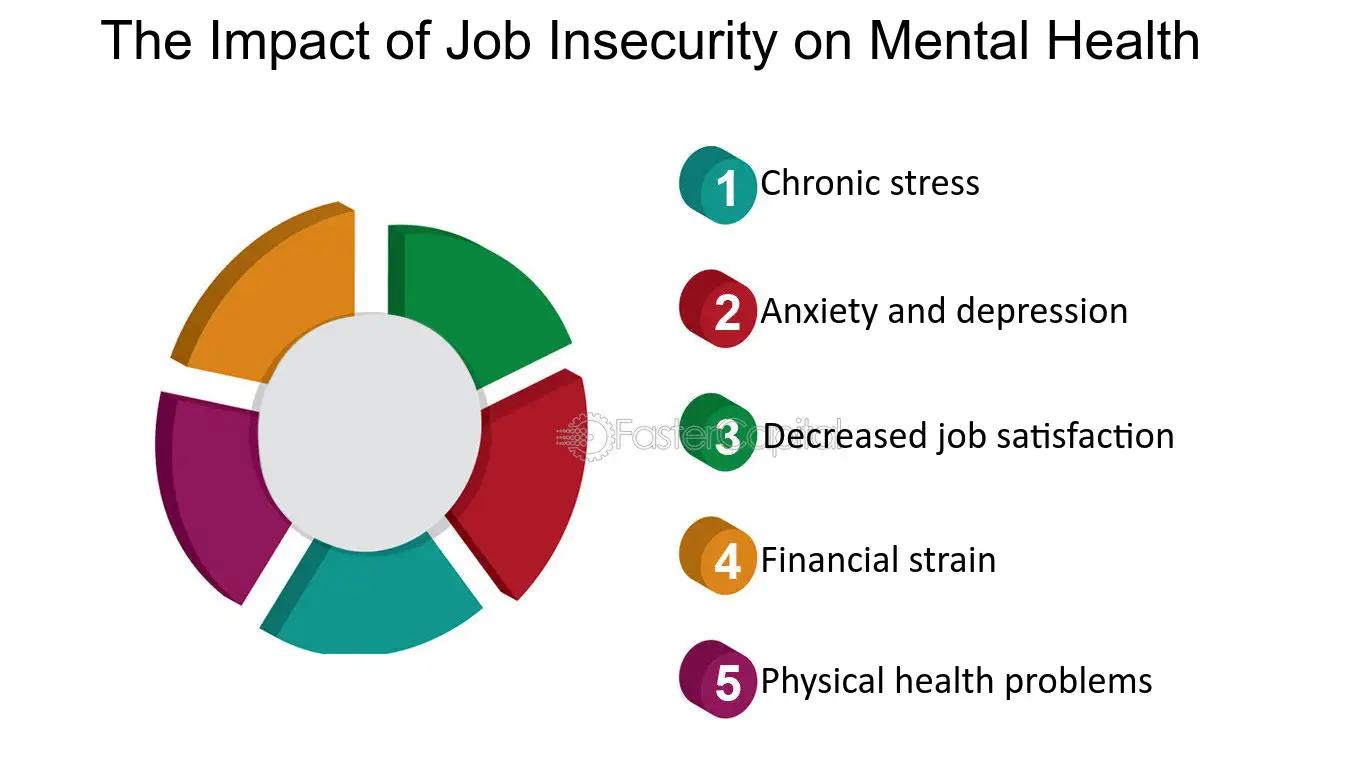
Job insecurity operates as a silent disruptor [11], [8], intertwining financial uncertainty with psychological strain [9], [10]. Unlike unemployment, which is overt and measurable, the fear of losing one’s job creates a persistent state of vigilance, eroding mental health over time. This phenomenon is particularly acute among men, where societal norms equate professional stability with personal worth. The effort-reward imbalance model highlights this dynamic, showing that when high effort is met with insufficient job security, the resulting stress compounds emotional distress.
A comparative analysis of coping mechanisms reveals stark contrasts. Research from European labor markets indicates that men in industries with robust union protections report lower anxiety levels compared to those in deregulated sectors. However, these protections are not universally effective; in high-performance workplaces, even unionized employees often experience stress due to relentless productivity demands. This underscores the importance of contextual factors, such as organizational culture and management practices, in mitigating economic stress.
One overlooked nuance is the role of perceived control. Studies suggest that men who feel empowered to influence their job outcomes—through skill development or decision-making autonomy—exhibit greater resilience [12]. Yet, implementation varies: while tech firms like Google integrate autonomy into their workflows, traditional industries often lag, perpetuating stress cycles.
"Economic stress is not just a financial issue; it’s a psychological battleground where identity and self-worth are at stake."
— Dr. Hans De Witte, Occupational Psychologist
Addressing job insecurity requires a paradigm shift: organizations must balance economic imperatives with psychological safeguards, fostering environments where stability and self-efficacy coexist.
The Role of Gender Stereotypes in Career Choices
Gender stereotypes act as invisible architects of career trajectories [13], [14], subtly steering men toward roles that align with societal expectations rather than personal aptitude. This dynamic is particularly evident in the persistent underrepresentation of men in caregiving professions, such as nursing or early childhood education. These fields, often perceived as "feminine," are stigmatized, leading to a cycle where men avoid them, further entrenching the stereotype.
A critical mechanism at play is the concept of stereotype threat, where individuals underperform or avoid certain roles due to fear of confirming negative societal beliefs. For men, this manifests as anxiety about diminished social status or perceived inadequacy in roles requiring emotional labor. A 2023 study by the Asia Pacific Career Development Journal revealed that men in caregiving roles frequently reported heightened scrutiny and skepticism about their competence [5], [15], exacerbating workplace stress [16].
To counteract these dynamics, organizations like the European Commission have implemented gender-neutral job descriptions and targeted recruitment campaigns. These initiatives have shown promise, with a 15% increase in male applicants for caregiving roles over three years. However, broader cultural shifts are essential to dismantle the stigma entirely.
"Challenging stereotypes is not just about representation; it’s about unlocking human potential across all domains."
— Dr. Bettina Hannover, Gender Studies Expert
Redefining Success and Achieving Work-Life Balance
Success, traditionally measured by financial achievement, often neglects the multidimensional nature of personal fulfillment. A 2024 study by the International Journal of Behavioral Science revealed that men who prioritized intrinsic goals—such as personal growth and relationships—reported a 32% higher life satisfaction compared to those focused solely on extrinsic rewards like income. This underscores the need to redefine success beyond monetary metrics.
The concept of psychological flexibility, a cornerstone of Acceptance and Commitment Therapy (ACT), offers a transformative framework. By aligning actions with core values rather than societal expectations [19], [8], individuals can mitigate burnout and enhance resilience [17], [18]. For instance, a senior executive at Deloitte restructured his workweek to include daily mindfulness practices, resulting in a 20% increase in productivity and reduced stress.
Success, like a well-balanced ecosystem, thrives on diversity. Integrating emotional intelligence, leisure, and purpose into professional life not only sustains mental health but also fosters long-term career innovation.
Strategies for Managing Burnout
One often-overlooked strategy for managing burnout is the deliberate cultivation of psychological detachment from work during non-working hours. This concept, rooted in occupational health psychology, emphasizes the importance of mentally disengaging from professional responsibilities to allow for cognitive and emotional recovery. While many organizations advocate for work-life balance, few address the mechanisms that enable employees to truly "switch off."
Psychological detachment operates on the principle that recovery from stress requires a clear boundary between work and personal life. Research published in the Journal of Applied Psychology highlights that individuals who engage in activities unrelated to their professional roles—such as hobbies, physical exercise [24], or social interactions—report significantly lower levels of emotional exhaustion. However, achieving this detachment is often complicated by the pervasive use of digital communication tools, which blur the lines between work and leisure.
A comparative analysis reveals that companies implementing strict "no after-hours email" policies, such as Volkswagen in Germany [22], [23], have seen measurable improvements in employee well-being and productivity. Conversely [20], [21], organizations without such boundaries often experience higher turnover rates and diminished morale. This underscores the critical role of organizational culture in facilitating detachment.
"True recovery from burnout requires more than time off; it demands a structural and psychological shift in how we approach work boundaries."
— Dr. Sabine Sonnentag, Professor of Work and Organizational Psychology
To implement this effectively, leaders must model detachment behaviors, such as refraining from sending late-night emails, and encourage employees to establish personal rituals that signal the end of the workday. By embedding these practices into workplace norms, organizations can foster resilience and sustainable performance.
Self-Defined Success: Moving Beyond Traditional Norms
The concept of self-defined success challenges the entrenched belief that achievement is solely measured by financial gain [26], [27]. Instead, it emphasizes aligning professional pursuits with intrinsic values, fostering a more sustainable and fulfilling approach to work and life. This shift is particularly significant in dismantling the psychological toll of traditional masculine norms, which often equate self-worth with economic dominance.
A critical mechanism underpinning this approach is the integration of value-based goal setting. Unlike conventional performance metrics, this technique prioritizes personal growth, creativity, and relational well-being. For instance, a 2024 study by the International Journal of Behavioral Science demonstrated that men who actively aligned their careers with personal passions reported a 28% reduction in workplace stress and a 35% increase in overall life satisfaction [8], [25]. These findings underscore the transformative potential of redefining success through a personalized lens.
However, implementation varies across industries. Creative sectors, such as design and media, often provide greater flexibility for value-driven work, while traditional corporate environments may resist such shifts due to rigid hierarchies. Addressing this requires organizational leaders to model and reward diverse definitions of success, fostering cultures that value emotional intelligence and innovation alongside financial performance.
"True success is not about meeting societal expectations but about crafting a life that reflects your deepest values."
— Dr. Brené Brown, Researcher and Author
By embracing this paradigm, individuals and organizations alike can unlock untapped potential, creating ecosystems where success is as diverse as the people pursuing it.
The Future of Male Roles in Shifting Labor Markets
As automation and AI redefine industries, male-dominated sectors like manufacturing and logistics face significant disruption. A 2025 report by the World Economic Forum revealed that 47% of jobs in these fields are at high risk of automation [30], [31], disproportionately affecting men who rely on these roles for identity and financial stability [28], [29]. This shift challenges traditional masculine norms, which often equate self-worth with physical labor and economic provision.
Counterintuitively, emerging opportunities in HEAL (health, education, administration, and literacy) fields—historically female-dominated—offer a pathway for men to adapt. For example, targeted recruitment campaigns by the European Commission increased male participation in caregiving roles by 15% over three years, demonstrating the potential for cultural shifts when stereotypes are actively dismantled.
The key lies in fostering adaptive resilience: equipping men with skills for roles emphasizing emotional intelligence and collaboration. This approach not only mitigates economic displacement but also redefines masculinity, aligning it with modern labor demands and diverse contributions.
Impact of Automation and Technological Change
Automation’s influence on male-dominated industries extends beyond job displacement [32], [33], fundamentally altering the dynamics of skill valuation [36]. A critical yet underexplored aspect is the shift from physical labor to cognitive and emotional competencies, which challenges traditional masculine identity frameworks [34], [35]. This transition is particularly evident in manufacturing, where robotic systems now perform tasks once reliant on manual expertise.
The underlying mechanism driving this change is the increasing demand for non-routine analytical and interpersonal skills. Unlike routine tasks, which are easily automated, these skills require adaptability, problem-solving, and emotional intelligence—areas historically undervalued in male-dominated sectors. For instance, a study by the International Federation of Robotics highlights that industries integrating collaborative robots (cobots) have seen a 20% increase in demand for roles requiring human-machine interaction, such as system monitoring and troubleshooting.
However, this evolution is not without challenges. Men transitioning into these hybrid roles often face societal stigma, as these positions are perceived as less "masculine." This stigma can hinder skill acquisition and adaptation, creating a psychological barrier to workforce reintegration. Addressing this requires targeted interventions, such as mentorship programs that normalize emotional intelligence as a professional asset.
"The future of work demands a redefinition of masculinity, where adaptability and collaboration are celebrated as strengths."
— Dr. Bettina Hannover, Gender Studies Expert
To bridge this gap, organizations must design training programs that integrate technical and interpersonal skill development, ensuring men can thrive in roles that blend human judgment with technological precision. This approach not only mitigates displacement but also fosters a more inclusive and resilient workforce.
Emerging Trends in Masculine Identity and Work
A pivotal trend reshaping masculine identity in the workplace is the integration of emotional intelligence (EI) into traditionally male-dominated roles. While EI has long been undervalued in these sectors, its growing importance reflects a paradigm shift in how success and leadership are defined. This evolution is not merely theoretical; it is driven by the increasing complexity of collaborative environments where technical expertise alone is insufficient.
The mechanism behind this shift lies in the interplay between team dynamics and decision-making. Research from the University of Sydney highlights that teams led by individuals with high EI outperform their counterparts by 25% in problem-solving efficiency [29], [25]. This is particularly evident in industries like engineering, where cross-disciplinary collaboration is essential. Emotional intelligence enables leaders to navigate interpersonal conflicts, foster trust, and align diverse perspectives—skills that are now critical in high-stakes projects.
However, the adoption of EI faces resistance due to entrenched stereotypes equating masculinity with stoicism. Addressing this requires targeted interventions, such as leadership programs that normalize emotional competencies. For example, Siemens AG has implemented EI training for mid-level managers [7], [28], resulting in a 15% improvement in employee retention rates.
"Emotional intelligence is not a soft skill; it’s a strategic asset in modern leadership."
— Dr. Laura Guillén, Organizational Psychologist
By embracing EI, men can redefine workplace masculinity, balancing traditional strengths with the demands of contemporary leadership.
FAQ
What are the historical roots of the male breadwinner model and its impact on modern work identity?
The male breadwinner model originated in 19th-century England, shaped by industrialization and labor policies that prioritized men as primary earners while marginalizing women's economic roles. Trade unions and societal norms reinforced this framework, embedding financial provision as central to masculine identity. Over time, this model influenced global labor markets, perpetuating gendered economic disparities [2], [3]. Today [4], [1], its legacy persists, as men often equate self-worth with financial success, creating identity challenges amidst shifting economic realities. Understanding these historical roots is crucial for addressing modern pressures and fostering a more inclusive perspective on work, money, and purpose in contemporary society.
How do financial pressures influence men's mental health and their sense of purpose in today's economy?
Financial pressures significantly impact men's mental health and sense of purpose by reinforcing societal expectations that equate masculinity with economic provision. Economic instability, such as job insecurity or debt, exacerbates stress and anxiety [38], [5], often leading to feelings of inadequacy. These pressures are compounded by cultural norms discouraging emotional vulnerability, limiting access to mental health support [8]. Additionally, the evolving economy challenges traditional roles [37], [10], leaving many men struggling to redefine their identity. Addressing these issues requires fostering environments that value diverse contributions, promoting financial literacy, and encouraging open discussions about mental health to alleviate the psychological toll of financial stress.
What strategies can men adopt to balance career ambitions with personal fulfillment and emotional well-being?
Men can balance career ambitions with personal fulfillment and emotional well-being by setting clear boundaries between work and personal life [39], [40], such as defining work hours and prioritizing downtime. Engaging in self-care practices like exercise, mindfulness, and hobbies fosters mental resilience. Building strong support networks, including mentors and peer groups, provides emotional grounding [9]. Aligning career goals with intrinsic values enhances purpose and satisfaction [18], [17], while delegating tasks reduces stress. Additionally, seeking professional guidance when needed and embracing emotional intelligence in decision-making can help men navigate pressures effectively, creating a sustainable balance between professional success and personal well-being.
How is the evolving labor market reshaping traditional masculine roles and financial expectations?
The evolving labor market, driven by automation [43], globalization, and technological advancements, is challenging traditional masculine roles tied to physical labor and sole financial provision. Male-dominated industries like manufacturing face disruption, while growth in caregiving and knowledge-based sectors demands emotional intelligence and adaptability [41], [42]. These shifts redefine financial expectations, emphasizing collaboration and diverse skill sets over traditional hierarchies. Men are increasingly navigating dual-income dynamics and non-traditional roles, requiring a reimagining of identity and purpose. Embracing lifelong learning, skill diversification, and cultural shifts toward inclusive work environments can help men adapt to these transformative economic landscapes.
What role does emotional intelligence play in redefining success and leadership for men in the workplace?
Emotional intelligence (EI) is pivotal in redefining success and leadership for men by emphasizing empathy, adaptability, and interpersonal skills over traditional dominance. In collaborative workplaces, EI fosters trust [14], [45], enhances team dynamics, and improves decision-making, aligning leadership with modern organizational needs. Men who integrate EI into their roles can navigate complex challenges, balance professional and personal priorities, and inspire innovation [46]. This shift challenges outdated masculine norms, promoting a holistic view of success that values emotional awareness alongside technical expertise [44], [17]. Cultivating EI through training and mentorship equips men to lead effectively in evolving, inclusive work environments.
References
Breadwinner model - Wikipedia. Retrieved from https://en.wikipedia.org/wiki/Breadwinner_model
The Male Breadwinner Model | International Museum of Women. Retrieved from https://exhibitions.globalfundforwomen.org/economica/property-and-wealth/male-breadwinner-model
The Origins and Expansion of the Male Breadwinner Family: The Case of Nineteenth-Century Britain | International Review of Social History | Cambridge Core. Retrieved from https://www.cambridge.org/core/journals/international-review-of-social-history/article/origins-and-expansion-of-the-male-breadwinner-family-the-case-of-nineteenthcentury-britain/C5D42E9BA2C056B5BF2CD074A26A2D8A
The Origins and Expansion of the Male Breadwinner Family: The Case of Nineteenth-Century Britain. Retrieved from https://www.cambridge.org/core/services/aop-cambridge-core/content/view/C5D42E9BA2C056B5BF2CD074A26A2D8A/S0020859000114786a.pdf/the-origins-and-expansion-of-the-male-breadwinner-family-the-case-of-nineteenth-century-britain.pdf
Gender Norms: The Hidden Toll on Men's Mental Health. Retrieved from https://mensprosperityclub.com/gender-norms-the-hidden-toll-on-mens-mental-health/
The male breadwinner nuclear family is not the ‘traditional’ human family, and promotion of this myth may have adverse health consequences | Philosophical Transactions of the Royal Society B: Biological Sciences. Retrieved from https://royalsocietypublishing.org/doi/10.1098/rstb.2020.0020
Navigating Role Models: Shaping Masculine Identity Among Transmasculine and Cisgender Emerging Adults | Sexuality Research and Social Policy. Retrieved from https://link.springer.com/article/10.1007/s13178-024-01029-9
Men’s Work-Related Stress and Mental Health: Illustrating the Workings of Masculine Role Norms - PMC. Retrieved from https://pmc.ncbi.nlm.nih.gov/articles/PMC6438430/
(PDF) JOB INSECURITY, STRESS AND GENDER. Retrieved from https://www.academia.edu/3555931/JOB_INSECURITY_STRESS_AND_GENDER
Economic insecurity: A socioeconomic determinant of mental health - ScienceDirect. Retrieved from https://www.sciencedirect.com/science/article/pii/S2352827318300594
(PDF) Job insecurity, socio-economic circumstances and depression. Retrieved from https://www.researchgate.net/publication/38080109_Job_insecurity_socio-economic_circumstances_and_depression
Frontiers | Perceived Job Insecurity and Anxiety. A Multilevel Analysis on Male and Female Workers in European Countries. Retrieved from https://www.frontiersin.org/journals/sociology/articles/10.3389/fsoc.2020.573549/full
(PDF) How Gender Stereotypes Impact the Career Choice of High School Students. Retrieved from https://www.researchgate.net/publication/370220098_How_Gender_Stereotypes_Impact_the_Career_Choice_of_High_School_Students
[Study] Male vs Female Dominated Career & Stereotypes. Retrieved from https://www.myperfectresume.com/career-center/careers/basics/gendered-jobs
https://ijip.in/wp-content/uploads/2024/05/18.01.435.20241202.pdf. Retrieved from https://ijip.in/wp-content/uploads/2024/05/18.01.435.20241202.pdf
https://repositori-api.upf.edu/api/core/bitstreams/a9956810-a5fa-43c6-8ed3-ba32a1d77eb3/content. Retrieved from https://repositori-api.upf.edu/api/core/bitstreams/a9956810-a5fa-43c6-8ed3-ba32a1d77eb3/content
How Men Can Combat Workplace Burnout and Stay Healthy. Retrieved from https://www.linkedin.com/pulse/how-men-can-combat-workplace-burnout-stay-healthy-robert-weigel-i0kxc
Work Life Balance: strategies to help men reduce burnout. Retrieved from https://refreshcounselling.ca/blog/Men039s%2BMental%2BHealth%2BSeries%2B%2BWork%2BLife%2BBalance%2B-%2BStrategies%2Bfor%2BMen%2Bto%2BReduce%2BBurnout/61
Introduction to the Special Collection on Finding Work–Life Balance: History, Determinants, and Consequences of New Breadwinning Models in the Industrialized World. Retrieved from https://www.demographic-research.org/volumes/vol37/26/37-26.pdf
Preventing burnout: 7 strategies and when to seek help. Retrieved from https://www.medicalnewstoday.com/articles/preventing-burnout
Strategies To Help Managers Deal with Burnout - WebMD Health Services. Retrieved from https://www.webmdhealthservices.com/blog/manager-burnout-is-getting-worse-strategies-to-help-managers-cope/
Addressing Burnout: Strategies For Recovery And Prevention. Retrieved from https://mhcsandiego.com/blog/strategies-for-recovery-and-prevention/
Eight Ideas for Managing Stress and Extinguishing Burnout | AAFP. Retrieved from https://www.aafp.org/pubs/fpm/issues/2002/0400/p35.html
4 Steps to Beating Burnout. Retrieved from https://hbr.org/2016/11/beating-burnout
(PDF) Men, Masculinities and the Modern Career: Contemporary and Historical Perspectives. Retrieved from https://www.academia.edu/43935476/Men_Masculinities_and_the_Modern_Career_Contemporary_and_Historical_Perspectives
Contemporary Men and Masculinity | Adobe Blog. Retrieved from https://blog.adobe.com/en/publish/2024/06/20/contemporary-men-masculinity
http://www.csun.edu/~snk1966/R%20Simpson%20-%20Masculinity%20at%20Work%20--The%20Experiences%20of%20Men%20in%20Female%20Dominated%20Occupations.pdf. Retrieved from http://www.csun.edu/~snk1966/R%20Simpson%20-%20Masculinity%20at%20Work%20--The%20Experiences%20of%20Men%20in%20Female%20Dominated%20Occupations.pdf
The Future of Masculinity: Trends and Insights. Retrieved from https://www.numberanalytics.com/blog/future-of-masculinity-trends-and-insights
A Shift in the Workforce: Where Are Men Going? - Broadleaf Results. Retrieved from https://broadleafresults.com/blog/trends/a-shift-in-the-workforce-where-are-men-going/
Work, Caregiving, and Masculinities. Retrieved from https://scholars.law.unlv.edu/cgi/viewcontent.cgi?httpsredir=1&article=1660&context=facpub
Work as a Masculinity Contest. Retrieved from https://repository.uclawsf.edu/cgi/viewcontent.cgi?article=2682&context=faculty_scholarship
Job automation, use of new technologies and transformation of the labour market | European Institute for Gender Equality. Retrieved from https://eige.europa.eu/publications-resources/toolkits-guides/gender-equality-index-2020-report/job-automation-use-new-technologies-and-transformation-labour-market?language_content_entity=en
Automation and the Sexes: Is Job Transformation More Likely Among Women?. Retrieved from https://www150.statcan.gc.ca/n1/pub/11f0019m/11f0019m2020015-eng.htm
Exploring the impact of automation and new technologies on the future of U.S. workers and their families - Equitable Growth. Retrieved from https://equitablegrowth.org/exploring-the-impact-of-automation-and-new-technologies-on-the-future-of-u-s-workers-and-their-families/
Automation technologies and their impact on employment: A review, synthesis and future research agenda - ScienceDirect. Retrieved from https://www.sciencedirect.com/science/article/pii/S0040162523001336
https://cdhowe.org/wp-content/uploads/2024/12/Commentary_585_0-1.pdf. Retrieved from https://cdhowe.org/wp-content/uploads/2024/12/Commentary_585_0-1.pdf
The Relationship Between Financial Worries and Psychological Distress Among U.S. Adults - PMC. Retrieved from https://pmc.ncbi.nlm.nih.gov/articles/PMC8806009/
Menâs Mental Health Matters: Identifying and Addressing Burnout | Shift Collab. Retrieved from https://www.shiftcollab.com/blog/men-s-mental-health-matters-identifying-and-addressing-burnout
5 self care tips for men to conquer burnout and boost performance | Health - Hindustan Times. Retrieved from https://www.hindustantimes.com/lifestyle/health/5-self-care-tips-for-men-to-conquer-burnout-and-boost-performance-101745221264329.html
The Dual Impact of Gender on Career Paths and Success » Gender Studies. Retrieved from https://gender.study/psychology-of-gender/gender-impact-career-paths-success/
The evolution of gender in the labor market - ScienceDirect. Retrieved from https://www.sciencedirect.com/science/article/abs/pii/S157344632400018X
Breaking the chains of traditional masculinity: another hidden driver of gender inequality - Shape Talent. Retrieved from https://shapetalent.com/breaking-the-chains-of-traditional-masculinity-another-hidden-driver-of-gender-inequality/
The Emerging Gender Gap in Education and Labor Markets: A Puzzle for Social Science, a Challenge for Policy. Retrieved from https://economics.mit.edu/sites/default/files/publications/wayward%20sons%202013.pdf
What is a Man? Redefining Male Success. Retrieved from https://mcgrathblog.nd.edu/category/articles/2016/04/11/what-is-a-man-redefining-male-success
"Female and male coworkers: Masculinity, sexism, and interpersonal comp" by Suzanne H. Lease, Whitney A. Shuman et al.. Retrieved from https://digitalcommons.memphis.edu/facpubs/10255/
Talking About "Toxic Masculinity" - Men's Resource Center. Retrieved from https://menscenter.org/toxic-masculinity/