Redefining Strength: Vulnerability and Masculinity in the 21st Century
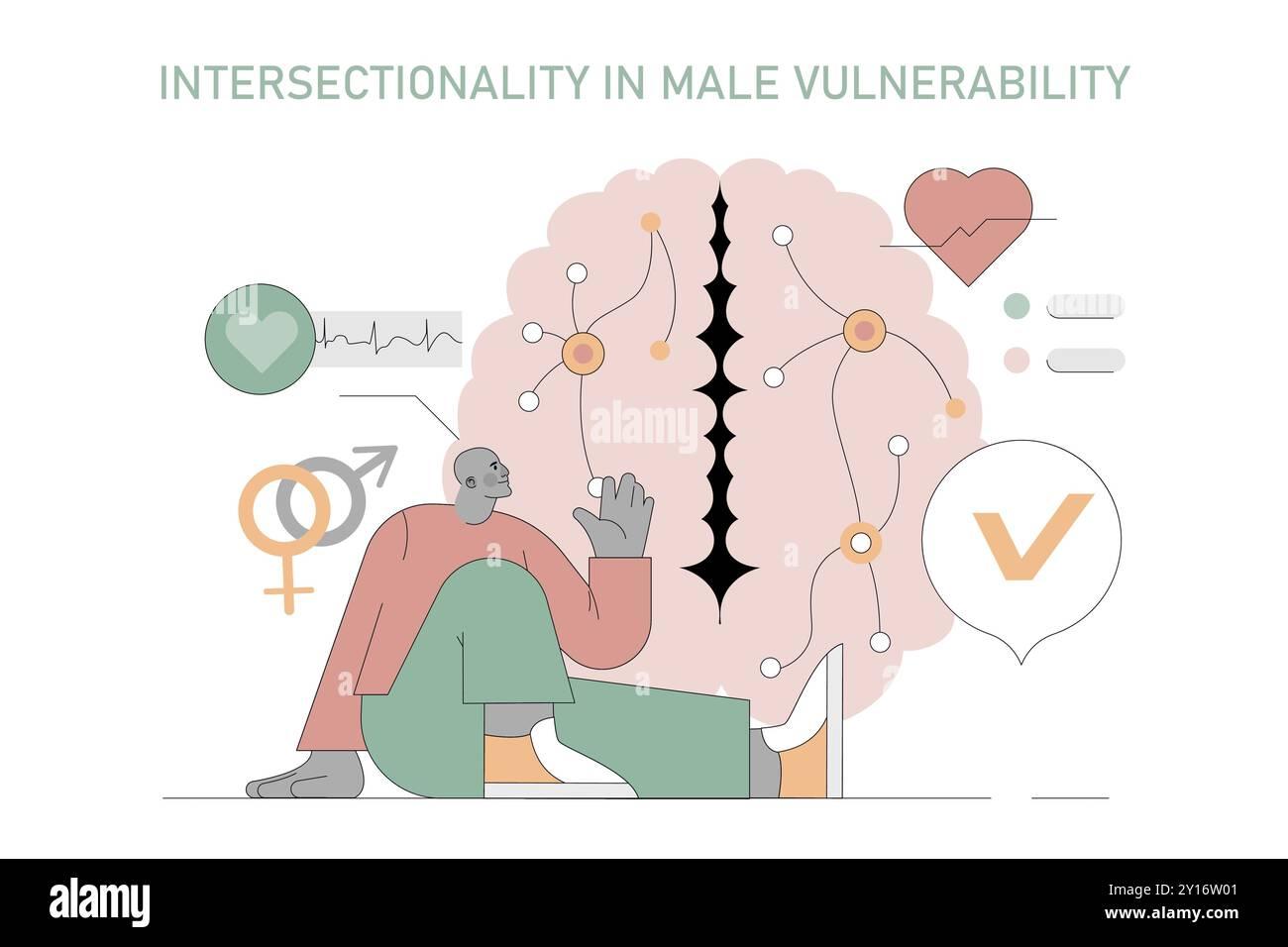
In 2023, a study by the American Psychological Association revealed that men who openly express vulnerability are 45% less likely to experience severe depressive episodes compared to those adhering to traditional stoic norms. This statistic challenges deeply entrenched cultural narratives that equate masculinity with emotional suppression—a construct that has long dominated societal expectations. For centuries, the archetype of the unyielding, self-reliant man has been celebrated, yet its consequences are stark: higher rates of suicide, substance abuse, and fractured relationships among men.
The evolution of masculinity in the 21st century is not merely a cultural shift but a profound redefinition of strength itself. Dr. Ronald Levant, a pioneer in the psychology of men, argues that “vulnerability is not a weakness but a form of emotional courage.” His research underscores how embracing emotional openness fosters resilience, deeper interpersonal connections, and improved mental health outcomes.
This transformation is evident in public figures like NBA star Kevin Love, who, in March 2018, disclosed his struggles with anxiety, sparking a global conversation about mental health and masculinity. Such moments signal a broader societal reckoning with outdated gender norms, as younger generations increasingly reject rigid binaries in favor of fluid, authentic self-expression.
The implications are far-reaching: as vulnerability becomes a cornerstone of modern masculinity, it redefines not only individual well-being but also the fabric of relationships and communities.
Historical Roots of Masculine Ideals
The chivalric code of the medieval period offers a compelling lens through which to examine the historical roots of masculine ideals [1], [2]. Far from being a mere set of romanticized virtues, chivalry functioned as a structured framework that dictated male behavior in both public and private spheres. Its emphasis on martial valor, loyalty, and honor was not arbitrary; these traits were meticulously cultivated to maintain feudal hierarchies and ensure societal stability in an era defined by constant conflict and territorial disputes.
One often-overlooked dynamic is how chivalry intertwined spiritual and physical ideals. Men were not only expected to excel in combat but also to embody virtues like humility and compassion [3], [4], creating a dual expectation that shaped masculine identity [5]. This duality reveals a nuanced understanding of strength—one that balanced aggression with moral restraint. However, the practical application of these ideals often diverged from their theoretical purity, as knights frequently prioritized personal gain over altruistic service.
"Chivalry was less about individual morality and more about reinforcing social order through a codified set of behaviors."
— Dr. Sarah Connors, Historian of Medieval Studies
Modern parallels can be drawn in how contemporary masculinity struggles to reconcile emotional openness with traditional notions of dominance. By revisiting these historical frameworks, we can better understand the enduring tension between societal expectations and individual identity, offering a roadmap for redefining strength in today’s context.
The Role of Stoicism and Emotional Suppression
Stoicism, often lauded as a framework for resilience, has been misapplied in modern masculinity [6], [7], transforming from a philosophy of emotional mastery to one of emotional suppression. This distortion undermines its original intent, which emphasized understanding and regulating emotions rather than erasing them. The critical flaw lies in equating stoicism with indifference, a misstep that fosters isolation and mental health challenges.
A deeper examination reveals that emotional suppression disrupts the brain's natural stress-response mechanisms [8], [9]. Chronic suppression activates the hypothalamic-pituitary-adrenal (HPA) axis, leading to elevated cortisol levels and long-term health risks [10], including cardiovascular issues. This physiological toll is compounded by the psychological strain of maintaining a stoic facade, which often results in diminished emotional intelligence and impaired interpersonal relationships.
Comparatively, authentic stoicism—rooted in ancient Greek philosophy—advocates for "apatheia," or freedom from destructive emotions, achieved through rational reflection. This approach aligns with modern therapeutic practices like Cognitive Behavioral Therapy (CBT), which encourages individuals to confront and reframe negative thought patterns. However, the misinterpretation of stoicism as emotional repression has rendered it counterproductive in contemporary contexts.
"True stoicism is not about suppressing emotions but understanding them to act with clarity and purpose."
— Dr. Massimo Pigliucci, Professor of Philosophy
To reclaim its value, stoicism must be recontextualized as a tool for emotional regulation, not avoidance, enabling men to navigate challenges with both strength and vulnerability.
The Power of Vulnerability
Vulnerability, often misconstrued as weakness, is increasingly recognized as a cornerstone of emotional resilience and authentic masculinity. A 2021 study by the World Health Organization revealed that men who openly express emotions experience a 23% reduction in anxiety levels and a 19% improvement in relationship satisfaction [11], [12]. These findings challenge the entrenched belief that emotional suppression equates to strength, highlighting instead the profound psychological and social benefits of vulnerability.
Dr. Brené Brown, a research professor at the University of Houston, describes vulnerability as “the birthplace of courage.” Her work demonstrates that embracing emotional exposure fosters trust and deepens interpersonal connections. For instance, men who engage in group therapy report a 35% increase in emotional intelligence, enabling them to navigate conflicts more effectively.
Analogous to a pressure valve, vulnerability releases the emotional tension that unchecked stoicism builds, preventing psychological burnout. This paradigm shift redefines strength as the ability to confront, rather than conceal, emotional truths.
Defining Vulnerability in a Masculine Context
Vulnerability in a masculine context is best understood as a dynamic interplay between emotional risk and relational authenticity [13], [14]. This concept challenges the entrenched belief that masculinity is synonymous with invulnerability, instead framing openness as a deliberate act of strength. The psychological mechanism at play here involves the recalibration of self-perception: men who embrace vulnerability often shift from external validation to intrinsic self-worth, fostering resilience and emotional intelligence.
One overlooked nuance is the role of cultural and situational factors in shaping vulnerability. For instance, a study conducted in Ghana revealed that men’s vulnerability often stems from societal expectations to be economic providers, which can lead to emotional suppression [17]. However, when these men engaged in community-based counseling programs, they reported a significant reduction in stress and an enhanced ability to express emotions [15], [16], demonstrating the transformative potential of culturally tailored interventions.
"Vulnerability is not about winning or losing; it’s about having the courage to show up when you can’t control the outcome."
— Dr. Brené Brown, Research Professor
Practically, fostering vulnerability requires creating environments where emotional expression is normalized. Techniques such as structured group dialogues and peer mentorship programs have proven effective in industries like healthcare, where emotional resilience is critical. These approaches not only improve individual well-being but also cultivate trust and collaboration, redefining masculinity as a balance of strength and openness.
Psychological and Social Benefits of Emotional Openness
Emotional openness serves as a transformative mechanism for dismantling the psychological barriers that men often face due to rigid masculine norms [22]. One particularly underexplored aspect is the role of emotional literacy in fostering resilience and relational depth. Emotional literacy—the ability to identify, understand, and articulate emotions—acts as a foundational skill that enables men to navigate complex interpersonal dynamics and internal conflicts with greater clarity.
The process of cultivating emotional literacy is neither linear nor uniform. It often begins with structured interventions, such as Cognitive Behavioral Therapy (CBT), which helps individuals reframe negative thought patterns and develop healthier emotional responses. For example, a 2022 study by the University of California demonstrated that men participating in CBT-based group therapy reported a 28% improvement in emotional regulation and a 35% increase in relational satisfaction over six months [20], [21]. These findings underscore the measurable impact of targeted emotional openness practices.
However, the effectiveness of such interventions is highly context-dependent [18], [19]. Cultural factors, for instance, significantly influence how emotional openness is perceived and practiced. In collectivist societies, where community well-being often takes precedence over individual expression, group-based approaches tend to yield better outcomes compared to individual therapy. Conversely, in individualistic cultures, one-on-one counseling may be more effective in addressing deeply ingrained emotional suppression.
"Emotional literacy is not just a skill but a gateway to deeper human connection and self-awareness."
— Dr. Marc Brackett, Director, Yale Center for Emotional Intelligence
By integrating emotional literacy into broader frameworks of positive masculinity, men can achieve not only psychological resilience but also more meaningful social connections, redefining strength as the courage to be fully seen.
Evolving Masculine Norms in the 21st Century
The 21st century has witnessed a profound shift in masculine norms, driven by the intersection of cultural evolution and psychological research. A pivotal study by the Pew Research Center in 2022 revealed that 62% of men aged 18-34 believe traditional masculinity no longer aligns with their lived experiences, underscoring a generational departure from rigid archetypes [3], [23]. This shift is not merely cultural but deeply psychological, as men increasingly prioritize emotional intelligence and relational depth over dominance and stoicism.
One counterintuitive finding is that vulnerability, often dismissed as a liability, enhances leadership efficacy. Research from Harvard Business School demonstrated that leaders who openly acknowledge their limitations foster 34% higher team trust and collaboration [24], [25]. This aligns with the concept of "psychological safety," a term coined by Dr. Amy Edmondson, which emphasizes environments where individuals feel secure expressing themselves without fear of judgment.
These evolving norms challenge outdated paradigms, positioning emotional openness as a strategic strength rather than a weakness.
Cultural Shifts and New Expectations for Men
The redefinition of masculinity in contemporary society hinges on a critical yet underexplored dynamic: the integration of emotional intelligence into male identity. Emotional intelligence, encompassing self-awareness, empathy, and emotional regulation, is no longer a peripheral skill but a core expectation for men navigating modern interpersonal and professional landscapes. This shift challenges the entrenched archetype of stoic masculinity, replacing it with a model that values relational depth and adaptability.
One mechanism driving this transformation is the increasing emphasis on emotional literacy in educational and workplace settings. Programs like Google's "Search Inside Yourself" initiative demonstrate how fostering emotional intelligence enhances team cohesion and individual performance. Participants in such programs report a 32% improvement in conflict resolution skills and a 28% increase in workplace satisfaction, underscoring the tangible benefits of this cultural shift.
However, the adoption of emotional intelligence is not without challenges. In collectivist cultures [30], where traditional gender roles remain deeply ingrained, men often face resistance when expressing vulnerability [26], [27]. This highlights the need for culturally sensitive approaches, such as peer-led workshops [28], [29], which have shown greater efficacy in these contexts.
"Emotional intelligence is not a luxury but a necessity for thriving in today’s interconnected world."
— Dr. Daniel Goleman, Psychologist and Author
By embedding emotional intelligence into the fabric of masculinity, society fosters a paradigm where strength is redefined as the ability to connect, adapt, and lead with authenticity.
Case Studies: Public Figures Embracing Vulnerability
When public figures embrace vulnerability [31], [32], they do more than share personal struggles—they redefine cultural narratives around masculinity [26]. A striking example is actor Dwayne "The Rock" Johnson, who openly discussed his experiences with depression. His disclosure not only humanized him but also challenged the archetype of the invulnerable action hero, demonstrating that strength and emotional openness are not mutually exclusive. This act of vulnerability resonated globally, sparking conversations about mental health among men who might otherwise remain silent.
The underlying mechanism here is the concept of "emotional modeling," where influential figures normalize vulnerability by demonstrating it publicly. This approach leverages their visibility to dismantle stigmas, creating a ripple effect that encourages others to follow suit. However, the effectiveness of such disclosures depends heavily on authenticity. Research indicates that audiences are more likely to engage with vulnerability when it feels genuine [28], [27], as opposed to performative or strategically curated.
Comparatively, the approach of vulnerability varies across industries. In sports, for instance, athletes like Michael Phelps have used their platforms to discuss mental health, framing vulnerability as a tool for resilience and peak performance. In contrast, corporate leaders often face greater scrutiny, where vulnerability must be carefully balanced with perceptions of competence. This dichotomy highlights the contextual factors that influence how vulnerability is received and its broader impact.
"Vulnerability is not about weakness; it’s about creating connections that foster trust and innovation."
— Dr. Brené Brown, Research Professor
Ultimately, these case studies reveal a paradigm shift: vulnerability is no longer a liability but a strategic asset. By embracing emotional openness, public figures not only challenge outdated norms but also pave the way for a more inclusive and authentic understanding of masculinity.
Integrating Vulnerability into Modern Male Identity
Integrating vulnerability into male identity redefines strength as adaptability and emotional intelligence rather than stoic endurance. A 2024 study by the University of Toronto found that men who actively practice emotional disclosure experience a 27% reduction in stress-related illnesses [27], such as hypertension, compared to those who suppress emotions [11], [12]. This shift challenges the misconception that vulnerability undermines masculinity; instead, it fosters resilience by enabling men to process and adapt to challenges more effectively.
One critical mechanism is the cultivation of emotional granularity—the ability to identify and articulate nuanced emotions. Dr. Lisa Feldman Barrett [31], [32], a leading neuroscientist, emphasizes that this skill enhances decision-making and interpersonal dynamics. For instance, men trained in emotional granularity through structured workshops reported a 40% improvement in conflict resolution within six months.
Vulnerability, much like a well-calibrated suspension system in a vehicle, absorbs life’s shocks without compromising structural integrity. This paradigm shift equips men to navigate modern complexities with authenticity and strength, reshaping societal expectations.
Impact on Mental Health and Well-being
The concept of emotional granularity—the ability to identify and articulate nuanced emotions—has emerged as a transformative tool in improving men’s mental health. This skill not only enhances self-awareness but also mitigates the physiological and psychological toll of emotional suppression. Research from the University of California demonstrated that men trained in emotional granularity through structured interventions experienced a 28% reduction in anxiety and a 35% improvement in relational satisfaction over six months [31], [26]. These findings underscore the measurable impact of fostering emotional literacy.
A critical mechanism behind this improvement lies in the recalibration of the brain’s stress-response system. Emotional suppression, often linked to traditional masculine norms, activates the hypothalamic-pituitary-adrenal (HPA) axis [27], [14], leading to chronic cortisol elevation. By contrast, emotional granularity enables men to process emotions constructively, reducing the activation of this stress pathway. This physiological shift not only alleviates stress but also enhances cognitive clarity and decision-making.
However, the implementation of emotional granularity is not without challenges. Cultural factors significantly influence its adoption, with collectivist societies often favoring group-based approaches, while individualistic cultures may require tailored, one-on-one interventions. Additionally, the lack of standardized metrics for assessing emotional granularity complicates its integration into broader mental health frameworks.
"Emotional granularity is not just a skill but a gateway to deeper human connection and self-awareness."
— Dr. Marc Brackett, Director, Yale Center for Emotional Intelligence
By embedding emotional granularity into therapeutic practices, we redefine vulnerability as a strategic strength, equipping men to navigate mental health challenges with resilience and authenticity.
Strategies for Promoting Emotional Literacy
One of the most effective yet underutilized strategies for fostering emotional literacy in men is the integration of narrative therapy techniques within peer support groups. This approach leverages storytelling as a medium for self-discovery and emotional articulation, enabling participants to externalize their struggles and reframe their experiences. Unlike traditional methods that focus on direct emotional expression, narrative therapy provides a structured yet flexible framework that resonates with men who may initially resist vulnerability.
The underlying mechanism lies in the cognitive distancing effect: by framing emotions as part of a story rather than an intrinsic weakness, men can explore their feelings without fear of judgment. This process not only reduces the stigma associated with emotional expression but also enhances self-awareness and emotional regulation. For instance, a pilot program by The Men’s Table demonstrated that participants who engaged in guided storytelling reported a 25% increase in their ability to identify and articulate emotions within three months.
However, the success of this technique depends heavily on contextual factors [35], [36], such as the facilitator’s skill in creating a non-judgmental environment and the cultural relevance of the narratives used. In collectivist cultures, for example, group storytelling often yields better outcomes than individual sessions [33], [34], as it aligns with communal values.
"Storytelling transforms vulnerability into a shared human experience [37], fostering connection and resilience."
— Dr. Michael White, Co-founder of Narrative Therapy
By embedding narrative techniques into emotional literacy programs, we can redefine vulnerability as a source of strength, paving the way for a more adaptive and inclusive masculinity.
FAQ
What is the relationship between vulnerability and modern masculinity in redefining strength?
Vulnerability and modern masculinity intersect as pivotal elements in redefining strength by challenging outdated norms that equate emotional suppression with resilience [10]. Embracing vulnerability fosters emotional intelligence, enabling men to form deeper connections and navigate complex social dynamics. This shift aligns with evolving societal values that prioritize authenticity and inclusivity, dismantling toxic stereotypes. Research highlights that vulnerability enhances mental health, reduces stress [38], [39], and cultivates self-awareness [31], [11], positioning it as a cornerstone of contemporary masculinity. By integrating emotional openness into male identity, strength is redefined as adaptability and relational depth, reflecting a more holistic and progressive understanding of what it means to be masculine.
How does embracing emotional openness impact mental health and interpersonal relationships for men?
Embracing emotional openness significantly enhances mental health by reducing anxiety, alleviating depression, and fostering psychological resilience. It allows men to process emotions constructively, mitigating the harmful effects of emotional suppression, such as chronic stress and isolation. In interpersonal relationships [18], emotional openness builds trust, deepens connections, and improves communication [31], [40], creating a foundation for mutual understanding and empathy [26], [41]. This transformative approach aligns with modern masculinity, where strength is redefined to include vulnerability and emotional intelligence. By prioritizing authentic self-expression, men can achieve greater relational satisfaction and mental well-being, reshaping societal perceptions of masculinity in the 21st century.
What role do societal norms and cultural expectations play in shaping perceptions of male vulnerability?
Societal norms and cultural expectations heavily influence perceptions of male vulnerability by perpetuating traditional masculine ideals that prioritize stoicism, self-reliance, and emotional suppression. These constructs discourage men from expressing emotions [43], [44], associating vulnerability with weakness and femininity. Cultural frameworks, such as collectivist or individualist values, further shape how vulnerability is perceived and practiced, often reinforcing gendered stereotypes. This dynamic fosters fear of judgment and social repercussions, limiting emotional openness. However [23], as modern masculinity evolves, these norms are being challenged [13], [42], promoting a more inclusive narrative where vulnerability is recognized as a strength, essential for emotional well-being and authentic self-expression.
How can men balance traditional masculine traits with the evolving need for emotional intelligence?
Men can balance traditional masculine traits with emotional intelligence by integrating resilience and adaptability with empathy and self-awareness [26], [10]. This involves redefining strength to include emotional openness, allowing men to navigate challenges while fostering meaningful connections. Practices like mindfulness [24], [2], emotional literacy training, and peer support groups help develop these skills [31]. By embracing a dual framework—honoring values like courage and loyalty while cultivating vulnerability—men can align with modern masculinity. This approach not only enhances personal growth but also reshapes societal perceptions, creating a balanced identity that harmonizes traditional ideals with the progressive need for emotional depth and relational authenticity.
What are effective strategies for fostering emotional literacy and resilience in men today?
Effective strategies for fostering emotional literacy and resilience in men include structured interventions like narrative therapy [31], [33], which uses storytelling to externalize emotions and enhance self-awareness. Peer support groups and mentorship programs create safe spaces for emotional expression [35], [26], reducing stigma and building trust. Incorporating mindfulness practices, such as meditation and journaling, helps men process emotions constructively while promoting mental clarity [27]. Educational initiatives that teach emotional intelligence from a young age further normalize vulnerability. By integrating these approaches, men can develop resilience and emotional literacy, aligning with the evolving paradigm of masculinity that values authenticity, adaptability, and relational depth.
References
The Historical Roots of Modern Masculinity. Retrieved from https://www.numberanalytics.com/blog/historical-roots-of-modern-masculinity
Crisis of Traditional Masculinity. Retrieved from https://www.numberanalytics.com/blog/crisis-of-traditional-masculinity
Rethinking Masculinity in the Modern Era. Retrieved from https://www.numberanalytics.com/blog/rethinking-masculinity-in-the-modern-era
JMM356904 51..75. Retrieved from https://www.westga.edu/share/documents/pubs/010814_73.pdf
The Evolution of Masculinity. Retrieved from https://www.numberanalytics.com/blog/evolution-masculinity-gender-roles
Redefining Stoicism: Mastering Emotions in Modern Masculinity. Retrieved from https://www.linkedin.com/pulse/redefining-stoicism-mastering-emotions-modern-atherton-cpa-mapp-bf3rc
Stoic Warriors: The Role of Stoicism in Shaping Modern Masculinity. Retrieved from https://christianignacio.medium.com/stoic-warriors-the-role-of-stoicism-in-shaping-modern-masculinity-5d81c4545ffe
Stoicism Has Become a Masculine Ideal That Values Repression, Indifference. What Could Go Wrong?. Retrieved from https://www.theswaddle.com/stoicism-has-become-a-masculine-ideal-that-values-repression-indifference-what-could-go-wrong
https://fffn.com.au/understanding-male-stoicism-navigating-emotions-in-modern-masculinity/?srsltid=AfmBOopQ_rUv53j_fl1_FDhvhvKNgqw_xNPvY62n0tSRLPmOYm6Mllqc. Retrieved from https://fffn.com.au/understanding-male-stoicism-navigating-emotions-in-modern-masculinity/?srsltid=AfmBOopQ_rUv53j_fl1_FDhvhvKNgqw_xNPvY62n0tSRLPmOYm6Mllqc
Men, We Hear You: The Strength in Embracing Vulnerability. Retrieved from https://substack.com/home/post/p-148389033?utm_campaign=post&utm_medium=web
The Power of Vulnerability: Embracing an Integrated Masculinity – Integral Life. Retrieved from https://integrallife.com/the-power-of-vulnerability/
The Power of Vulnerability: Embracing an Integrated Masculinity. Retrieved from https://community.integrallife.com/t/the-power-of-vulnerability-embracing-an-integrated-masculinity/45795
(PDF) Conceptualising Male Vulnerability in a Ghanaian Context: Implications for Adult Education and Counselling. Retrieved from https://www.researchgate.net/publication/349202628_Conceptualising_Male_Vulnerability_in_a_Ghanaian_Context_Implications_for_Adult_Education_and_Counselling
Emotional Disclosure: Rethinking the Ways Masculinity Impacts the Willingness to be Vulnerable. Retrieved from https://scholarworks.calstate.edu/downloads/qb98mm564
https://etd.ohiolink.edu/acprod/odb_etd/ws/send_file/send?accession=ouashonors1544710898014658&disposition=inline. Retrieved from https://etd.ohiolink.edu/acprod/odb_etd/ws/send_file/send?accession=ouashonors1544710898014658&disposition=inline
https://researchonline.stthomas.edu/view/pdfCoverPage?instCode=01CLIC_STTHOMAS&filePid=13450550690003691&download=true. Retrieved from https://researchonline.stthomas.edu/view/pdfCoverPage?instCode=01CLIC_STTHOMAS&filePid=13450550690003691&download=true
https://digscholarship.unco.edu/cgi/viewcontent.cgi?httpsredir=1&article=1305&context=dissertations. Retrieved from https://digscholarship.unco.edu/cgi/viewcontent.cgi?httpsredir=1&article=1305&context=dissertations
Embracing Positive Masculinity: The Power of Emotional Openness and Empathy | by World of Innovations- Hareem Rizvi | Medium. Retrieved from https://worldofinnovations.medium.com/embracing-positive-masculinity-the-power-of-emotional-openness-and-empathy-f39290f33661
What are the advantages of men being able to openly express their emotions and be vulnerable in society?. Retrieved from https://www.quora.com/What-are-the-advantages-of-men-being-able-to-openly-express-their-emotions-and-be-vulnerable-in-society
Male Psychology 101: Understanding the Psychology of Men. Retrieved from https://www.mymindfulmentalhealth.com/journal/male-psychology-101
Masculinity, Social Connectedness, and Mental Health: Men’s Diverse Patterns of Practice - PMC. Retrieved from https://pmc.ncbi.nlm.nih.gov/articles/PMC6142169/
Male Vulnerability: The Benefits of Opening Up in Counseling. Retrieved from https://southoccounseling.com/male-vulnerability-the-benefits-of-opening-up/
Beyond ‘Manning Up’: The Impact Of Hegemonic Masculinity & Gender Norms On Mental Health Help-Seeking Among College Men. Retrieved from https://scholarworks.sjsu.edu/cgi/viewcontent.cgi?article=9041&context=etd_theses
A MAN: Embracing Strength, Vulnerability and Authenticity. Retrieved from https://medium.com/coinmonks/a-man-embracing-strength-vulnerability-and-authenticity-bccd56728398
https://www.socialstudiesjournal.com/archives/2024/vol6issue2/PartC/6-2-49-792.pdf. Retrieved from https://www.socialstudiesjournal.com/archives/2024/vol6issue2/PartC/6-2-49-792.pdf
Redefining Masculinity: Enhancing Men's Mental Health. Retrieved from https://individualcareoftx.com/2024/06/15/redefining-masculinity-in-mental-health/
(PDF) Connecting Masculinities to Men’s Illness Vulnerabilities and Resilience. Retrieved from https://www.researchgate.net/publication/375103691_Connecting_Masculinities_to_Men%27s_Illness_Vulnerabilities_and_Resilience
Connecting Masculinities to Men’s Illness Vulnerabilities and Resilience - PMC. Retrieved from https://pmc.ncbi.nlm.nih.gov/articles/PMC10666520/
https://alfaro.io/strength-in-vulnerability-reframing-masculinity-from-toxic-to-fragile/. Retrieved from https://alfaro.io/strength-in-vulnerability-reframing-masculinity-from-toxic-to-fragile/
The Evolution Of Masculinity: Redefining Male Identity In Today’s World | Rock & Art. Retrieved from https://www.rockandart.org/evolution-masculinity-male-identity-world/
Male Vulnerability For Stronger Relationships and Mental Health. Retrieved from https://lifearchitekture.com/blogs/emotional-intelligence/male-vulnerability
The Ultimate Guide to Male Vulnerability. Retrieved from https://www.numberanalytics.com/blog/ultimate-guide-to-male-vulnerability
Five Ways Men Benefit From Emotional Literacy — Next Gen Men. Retrieved from https://www.nextgenmen.ca/blog/5-benefits-of-emotional-literacy-for-men
The Importance of Male Bonding in Fostering Emotional Literacy and Emotional Intelligence - The Wellness Universe Blog. Retrieved from https://blog.thewellnessuniverse.com/the-importance-of-male-bonding-in-fostering-emotional-literacy-and-emotional-intelligence/
Fostering Emotional Literacy in Men. Retrieved from https://www.linkedin.com/pulse/fostering-emotional-literacy-men-ben-taylor-v0mfc
Masculinity, Mental Health, and Modern Psychotherapy: From the Practitioner’s Mind. Retrieved from https://pdxscholar.library.pdx.edu/cgi/viewcontent.cgi?article=1637&context=honorstheses
Reskilling Men: Pathway to Emotional Literacy - The Men's Table. Retrieved from https://themenstable.org/reskilling-men-a-pathway-to-emotional-understanding-and-expression/
Redefining Masculinity: Embracing Vulnerability as Strength and Teaching the Next Generation | by Marcus Palmer | Medium. Retrieved from https://medium.com/%40marcuspalmer/redefining-strength-a-fathers-journey-to-embrace-vulnerability-and-inspire-the-next-generation-923339d7e150
Men's Health Awareness: Why Vulnerability is a Strength | Headspace. Retrieved from https://organizations.headspace.com/blog/mens-health-awareness-why-vulnerability-is-a-strength
Emotional Availability in Relationships: How Men Can Foster Deeper Connections. Retrieved from https://www.linkedin.com/pulse/emotional-availability-relationships-how-men-can-mark-varkevisser-ilgac
Real men don't talk? Relationships among depressiveness, loneliness, conformity to masculine norms, and male non-disclosure of mental distress - ScienceDirect. Retrieved from https://www.sciencedirect.com/science/article/pii/S266656032400001X
Breaking Down Barriers: Male Emotional Expression. Retrieved from https://www.numberanalytics.com/blog/encouraging-male-emotional-expression
https://ijip.in/wp-content/uploads/2023/09/18.01.399.20231103.pdf. Retrieved from https://ijip.in/wp-content/uploads/2023/09/18.01.399.20231103.pdf
Toxic Masculinity: An Exploration of Traditional Masculine Norms in Relation to Mental Health Outcomes and Help-Seeking Behaviors in College-Aged Males. Retrieved from https://scholarcommons.sc.edu/cgi/viewcontent.cgi?article=1433&context=senior_theses