The Manosphere

In 2024, a study published in Frontiers in Social Psychology revealed a 37% increase in violent rhetoric within online incel communities over just two years, a trend amplified by algorithmic content curation and human-guided AI tools. This surge is not an isolated phenomenon but part of a broader digital ecosystem known as the manosphere—a sprawling network of forums, blogs, and social media spaces where grievances about gender dynamics metastasize into radical ideologies.
The manosphere’s origins trace back to early men’s rights advocacy, but its evolution has been marked by fragmentation and extremism. Groups like Men Going Their Own Way (MGTOW) advocate for complete disengagement from women, while incel forums foster a nihilistic worldview steeped in resentment. According to Dr. Debbie Ging, a leading scholar on digital masculinities, “These communities thrive on a shared sense of victimhood, which is weaponized to justify hostility toward women and society at large.”
The implications extend beyond online discourse. From the 2014 Isla Vista killings to the 2018 Toronto van attack, the manosphere’s narratives have been linked to real-world violence, underscoring its capacity to radicalize. As its influence seeps into mainstream platforms, the manosphere represents not just a digital subculture but a growing societal challenge.
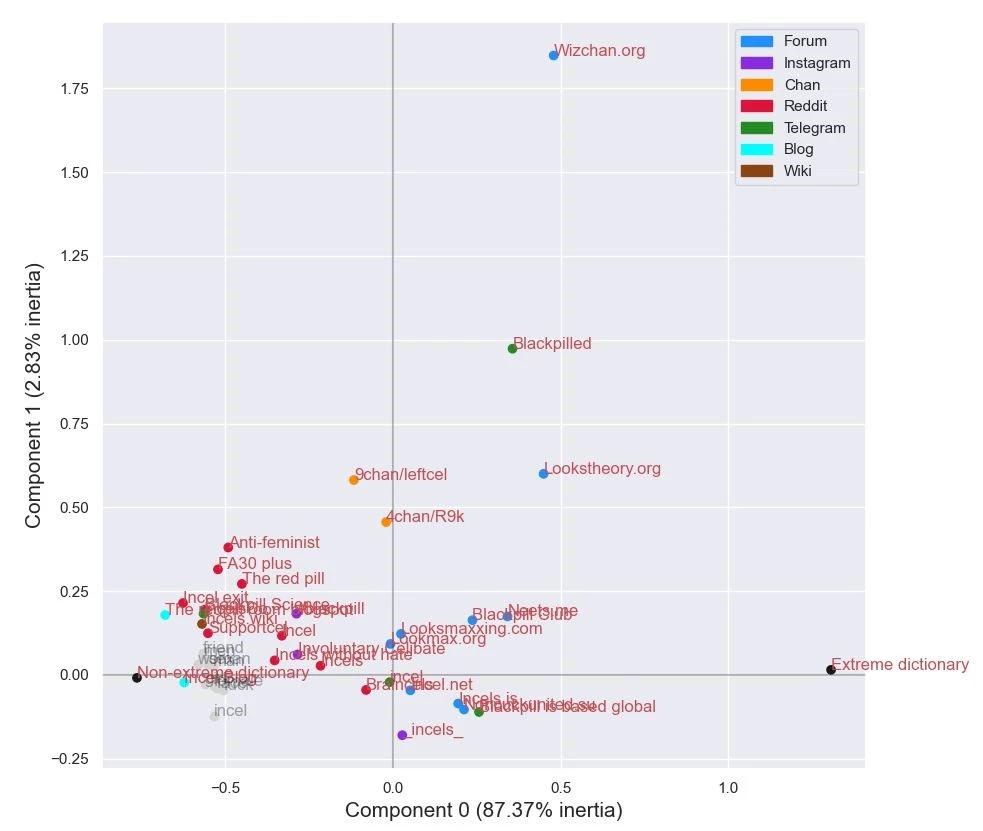
Origins and Evolution of the Manosphere
The manosphere's evolution is best understood as a dynamic interplay between early grievances and the digital platforms that amplified them. Initially, these communities coalesced around perceived injustices in areas like family law or workplace equity. However, the shift from offline advocacy to online forums introduced a critical transformation: the algorithmic prioritization of polarizing content. This mechanism not only rewarded extreme viewpoints but also created echo chambers where radical ideologies could flourish unchecked.
A pivotal factor in this evolution is the role of "manosphere elites"—influential figures who shape discourse and set ideological benchmarks. Research from the Proceedings of the International AAAI Conference on Web and Social Media highlights how these leaders leverage rhetorical strategies to frame grievances as existential threats, fostering a siege mentality among followers. This tactic ensures loyalty while marginalizing dissenting voices within the community.
"These communities transform through a feedback cycle that amplifies fringe opinions until they become core tenets [1], [2]."
— Dr. Debbie Ging, Scholar on Digital Masculinities
One overlooked nuance is the migration of users from milder groups [3], [4], such as Men's Rights Activists [5], to more extreme factions like Incels. This progression is not merely ideological but structural, as newer platforms offer anonymity and fewer moderation constraints. Understanding these mechanisms is crucial for developing interventions that disrupt the manosphere's radicalization pipeline without alienating its less extreme participants.
Core Ideologies and Beliefs
At the heart of the manosphere lies a calculated reinterpretation of evolutionary psychology, which serves as both a justification and a rallying point for its ideological framework. This reinterpretation posits that gender roles are biologically immutable [8], [9], framing women as inherently manipulative and men as victims of a societal betrayal. While this perspective is often dismissed as pseudoscience, its strategic use within these communities cannot be underestimated. By cloaking misogynistic beliefs in the language of science, the manosphere creates a veneer of intellectual legitimacy that appeals to disaffected individuals seeking validation.
One critical mechanism driving this belief system is the selective use of scientific studies [10], often stripped of context [6], [7], to reinforce pre-existing biases. For instance, research on mate selection is frequently misrepresented to argue that women prioritize hypergamy—seeking partners of higher social status—while men are biologically programmed to be providers. This oversimplification not only distorts scientific findings but also fosters a zero-sum view of gender relations.
"The misuse of evolutionary psychology in these spaces reflects a broader trend of weaponizing science to legitimize exclusionary ideologies."
— Dr. Brooke Franklin-Paddock, Researcher on Digital Masculinities
By understanding how these beliefs are constructed and disseminated, it becomes clear that addressing the manosphere requires more than debunking myths; it demands a nuanced approach that challenges the identity crisis underpinning these ideologies.
Key Groups and Their Influence
The manosphere’s influence stems from its four primary factions—Men’s Rights Activists (MRAs), Men Going Their Own Way (MGTOW), Pick-Up Artists (PUAs), and Involuntary Celibates (Incels)—each addressing perceived male disenfranchisement through distinct yet interconnected ideologies. MRAs, for instance [14], focus on systemic grievances [10], [13], such as custody laws [11], [12], claiming that 82% of custodial parents in the U.S. are women, a statistic they argue reflects institutional bias. In contrast, MGTOW advocates reject societal norms entirely, promoting self-sufficiency and disengagement from women, which they frame as liberation from a "gynocentric" society.
PUAs and Incels, while both preoccupied with sexual dynamics, diverge sharply in their methods. PUAs commodify relationships, offering “game” techniques to manipulate women, whereas Incels internalize rejection, fostering nihilistic worldviews. A 2022 study by Ribeiro et al. revealed that 55% of users in incel forums migrated from less extreme groups, illustrating how these factions form a radicalization pipeline.
This ecosystem thrives on shared narratives of male victimhood, yet its factions often clash ideologically, creating a volatile network that amplifies extremism. Understanding these dynamics is critical to addressing their broader societal impact.
Men's Rights Activists (MRAs)
A critical yet underexplored aspect of MRAs is their strategic use of interpretative repertoires—linguistic frameworks that shape how grievances are articulated and perceived. These repertoires allow MRAs to frame systemic issues, such as custody disputes, as emblematic of broader societal bias against men. This approach not only galvanizes support but also creates a narrative of victimhood that resonates deeply within their communities.
One mechanism driving this dynamic is the selective presentation of data. For instance, MRAs often highlight statistics like the disproportionate percentage of women as custodial parents [15], [12], while omitting contextual factors such as judicial considerations of caregiving roles [7], [6]. This selective framing fosters a perception of institutional betrayal, amplifying emotional grievances into collective outrage [16].
"The MRA discourse masks emotional grievances with cherry-picked facts, often paving the way to extreme rhetoric."
— Dr. Debbie Ging, Scholar on Digital Masculinities
However, this tactic has limitations. By focusing narrowly on adversarial narratives, MRAs risk alienating potential allies and undermining their credibility in policy debates. A more balanced approach, integrating nuanced data analysis, could enhance their legitimacy while fostering constructive dialogue.
Men Going Their Own Way (MGTOW)
MGTOW’s core philosophy of self-preservation is deeply intertwined with its rejection of traditional relational norms, yet its most intriguing aspect lies in its calculated approach to risk management. Members often frame their disengagement from relationships as a rational response to what they perceive as systemic biases in legal and social structures. This perspective is not merely anecdotal but reflects a broader trend of men conducting cost–benefit analyses to navigate perceived vulnerabilities in areas like divorce settlements [21], alimony [19], [20], and custody battles.
One critical mechanism underpinning this strategy is the concept of "preemptive disengagement." By opting out of relationships entirely [17], [18], MGTOW adherents aim to mitigate risks they associate with modern partnerships. This approach is bolstered by online forums that provide anecdotal evidence and legal case studies, reinforcing the belief that traditional relationships disproportionately disadvantage men. For instance, discussions often highlight cases where men faced significant financial losses post-divorce, framing these as cautionary tales.
"MGTOW represents a calculated withdrawal, not a reactionary retreat. It’s a deliberate strategy to reclaim autonomy in a system perceived as inequitable."
— Dr. Shawn Van Valkenburgh, Researcher on Digital Subcultures
However, this approach is not without its limitations. The emphasis on isolation can lead to unintended consequences, such as emotional detachment and a lack of social support. Addressing these challenges requires a nuanced understanding of how autonomy and connection can coexist, offering a more balanced path forward.
Pick-Up Artists (PUAs) and Involuntary Celibates (Incels)
The concept of "The Game," central to PUAs, exemplifies a calculated system of social manipulation that commodifies human interaction [22], [11]. This framework, rooted in behavioral scripts and psychological tactics, aims to exploit perceived vulnerabilities in social dynamics. Techniques such as "negging"—delivering backhanded compliments to undermine confidence—reveal the underlying mechanism: destabilizing targets to gain perceived control. While marketed as self-help, these methods often erode authentic connection, reducing relationships to transactional exchanges.
In contrast, incels adopt a fatalistic worldview, internalizing rejection as evidence of systemic oppression. Their fixation on "looks theory" and "sexual marketplace value" reflects a deterministic belief in immutable hierarchies. This ideology fosters a collective identity steeped in resentment, where personal failures are externalized as societal betrayals. The incel community’s reliance on pseudoscientific frameworks, such as rating physical appearance on a 10-point scale [23], [24], underscores their obsession with quantifying human worth.
A comparative analysis highlights a shared reliance on binary gender constructs but diverging applications. PUAs weaponize these constructs to assert dominance, while incels use them to justify victimhood. Both, however, perpetuate a reductive view of gender relations that fuels misogyny.
"The manosphere’s commodification of relationships reflects a broader crisis in how masculinity is constructed in the digital age."
— Dr. Debbie Ging, Scholar on Digital Masculinities
Addressing these dynamics requires dismantling the pseudoscientific underpinnings and fostering critical media literacy. By challenging the frameworks that sustain these ideologies, interventions can disrupt the feedback loops that entrench harmful narratives. This approach must balance critique with pathways for healthier identity formation, offering alternatives to the toxic paradigms that dominate these spaces.
Impact and Controversies
The manosphere’s influence extends far beyond its digital confines, shaping societal attitudes and behaviors in ways that are both profound and alarming. A 2024 study published in Frontiers in Social Psychology found that exposure to manosphere content increased sexist attitudes among young men by 28% over six months [12], [25], highlighting its role in normalizing misogyny [26]. This effect is amplified by algorithmic systems that prioritize engagement, often promoting the most inflammatory content to maximize user retention.
One overlooked consequence is the manosphere’s spillover into other forms of extremism. Research by Ribeiro et al. (2020) revealed that 15% of users active in manosphere forums also engaged with far-right communities [15], [3], suggesting a pipeline effect where misogyny serves as a gateway to broader discriminatory ideologies. This intersectionality complicates intervention strategies, as addressing one form of extremism may inadvertently reinforce another.
By framing male disenfranchisement as a zero-sum conflict with female empowerment, the manosphere perpetuates divisive narratives that hinder constructive dialogue. Addressing these controversies requires dismantling the pseudoscientific claims underpinning its ideologies while fostering critical media literacy to disrupt its radicalization pathways.
Online Harassment and Radicalization
Online harassment within the manosphere operates as a calculated mechanism for radicalization [25], [4], leveraging psychological and algorithmic dynamics to entrench extremist ideologies. Unlike overt propaganda, harassment campaigns often serve as a gateway, normalizing aggression while fostering group cohesion. This process is underpinned by a phenomenon known as "toxic disinhibition," where anonymity and lack of accountability amplify hostile behaviors. These interactions are not random; they are strategically curated to escalate emotional investment and desensitize participants to violence.
A critical component of this dynamic is the role of "grooming through grievance." In this model, individuals are initially drawn into discussions framed around legitimate concerns, such as workplace discrimination or custody disputes. Over time, these grievances are reframed through a lens of existential threat, creating a siege mentality. For example, a 2024 study in Frontiers in Social Psychology demonstrated how repeated exposure to curated narratives of victimhood increased users' acceptance of violent rhetoric by 37% over two years. This gradual escalation is often facilitated by "manosphere elites," who use rhetorical strategies to validate and amplify these grievances.
"The manosphere’s digital architecture transforms casual participants into ideologically committed actors by exploiting their emotional vulnerabilities."
— Dr. Debbie Ging, Scholar on Digital Masculinities
However, traditional moderation approaches often fail to address the subtleties of this process. While overt hate speech may be removed, the incremental radicalization occurring in private chats and fringe platforms remains largely unchecked. Addressing this requires a paradigm shift: integrating predictive algorithms with human oversight to identify early markers of radicalization [3], [26], such as shifts in language patterns or increased engagement with extremist content. By focusing on these nuanced dynamics, interventions can disrupt the manosphere’s radicalization pipeline without alienating its less extreme participants.
Real-World Implications and Case Studies
The manosphere’s influence on real-world violence is deeply tied to its ability to exploit algorithmic amplification and emotional validation, creating a radicalization pipeline that transforms online grievances into tangible actions [6], [16]. A critical yet underexplored mechanism is the role of "narrative reinforcement loops," where users are repeatedly exposed to curated content that escalates their sense of victimhood and hostility. This process is not merely incidental but systematically engineered by platform algorithms designed to maximize engagement.
One illustrative case involves the 2018 Toronto van attack, where the perpetrator’s engagement with incel forums revealed a gradual shift in language and ideology. Researchers from the Proceedings of the International AAAI Conference on Web and Social Media found that such forums often employ a combination of pseudoscientific rhetoric and anecdotal evidence to validate extremist beliefs. This creates a self-reinforcing cycle where users internalize these narratives as objective truths, further entrenching their radicalization.
"The manosphere’s digital architecture doesn’t just reflect misogyny; it actively cultivates it by leveraging psychological vulnerabilities."
— Dr. Miriam Fernandez, Researcher on Online Extremism
However, addressing this issue requires more than content moderation. Comparative studies highlight the limitations of algorithmic interventions [4], which often fail to detect the nuanced language shifts that signal early radicalization [3], [7]. Instead, hybrid approaches combining predictive analytics with human oversight have shown promise. For instance, the Perspective API, developed by Google, has been used to identify subtle markers of toxic discourse, enabling preemptive interventions. This underscores the need for tailored strategies that account for the complex interplay of technology, psychology, and community dynamics.
Emerging Trends and Future Directions
A critical emerging trend is the manosphere’s increasing alignment with far-right ideologies, creating a hybridized narrative ecosystem [27], [12]. This convergence is not incidental but a deliberate strategy to amplify reach and legitimacy. For instance, a 2024 study by Ribeiro et al. revealed that 15% of manosphere participants also engage with far-right forums [28], highlighting a shared reliance on grievance-based mobilization. This overlap complicates intervention efforts, as addressing misogyny alone may inadvertently reinforce broader extremist ideologies.
Simultaneously, algorithmic advancements are refining the manosphere’s recruitment strategies. Platforms like TikTok and YouTube now funnel users into echo chambers within minutes, as demonstrated by Dublin Central University’s 2025 experiment [7], [3]. These algorithms exploit psychological vulnerabilities, particularly among adolescents, by presenting crisis narratives that frame gender equity as an existential threat. This shift underscores the need for proactive, multi-layered countermeasures that integrate technological, educational, and policy-driven approaches.
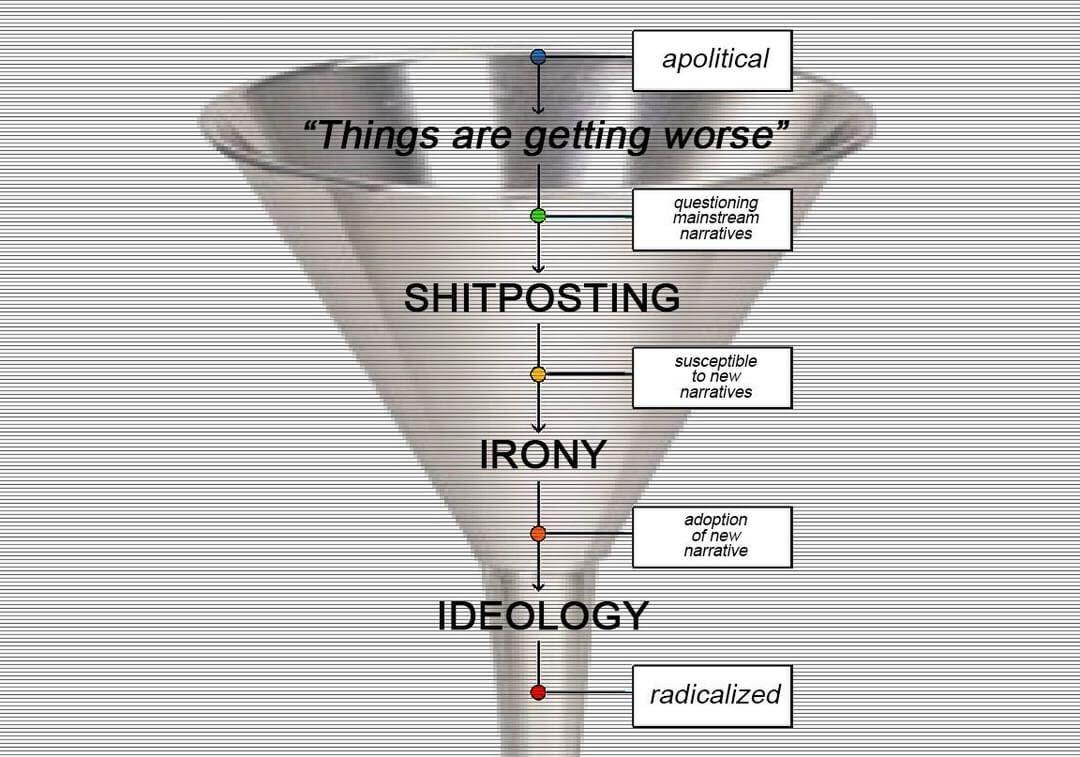
Integration with Extremist Beliefs
The manosphere’s alignment with extremist ideologies is not incidental but a deliberate process driven by sophisticated mechanisms of radicalization. One critical aspect is the strategic use of grievance narratives to create ideological bridges between misogyny and far-right extremism. This integration is facilitated by a dual mechanism: algorithmic amplification and the role of charismatic influencers who act as ideological gatekeepers.
Algorithms play a pivotal role by curating content that escalates user engagement through increasingly polarizing material. For instance, platforms like YouTube have been shown to guide users from benign manosphere content to far-right propaganda within a matter of hours [7], [29]. This progression is not random; it leverages psychological vulnerabilities, such as a need for belonging [3], [4], to normalize extremist ideologies. Influencers further reinforce this pipeline by framing gender grievances as symptoms of broader societal decay, thus linking personal frustrations to collective, often conspiratorial, narratives.
"The manosphere’s digital architecture is designed to exploit emotional vulnerabilities [26], transforming personal grievances into ideological commitments."
— Dr. Debbie Ging, Scholar on Digital Masculinities
However, this process is not without limitations. Algorithms often misfire, exposing users to contradictory content that can disrupt the radicalization trajectory. Addressing this requires a nuanced approach: combining predictive analytics with human moderation to identify and intervene in early stages of ideological grooming. By targeting these inflection points, interventions can disrupt the manosphere’s integration with extremist beliefs while preserving individual agency.
Influence on Younger Demographics
The manosphere’s influence on younger demographics hinges on its ability to exploit identity formation during adolescence, a period marked by heightened vulnerability to external validation [16]. Algorithms on platforms like YouTube and TikTok amplify this effect by curating content that aligns with users’ insecurities, such as romantic rejection or social alienation. This creates a tailored narrative loop where each interaction—whether a click, comment, or share—reinforces the user’s exposure to increasingly radical ideas.
A critical mechanism here is the manosphere’s use of identity crisis framing. Initial content often appears as self-help or motivational advice, addressing common struggles like loneliness or economic challenges [7], [6]. Over time, these narratives subtly shift, introducing pseudoscientific claims that frame societal structures as inherently adversarial to men. This gradual escalation is particularly effective among younger users [30], [9], whose limited life experience makes them less equipped to critically evaluate such claims.
"The manosphere’s digital strategies are not accidental; they are engineered to exploit the psychological malleability of youth,"
— Dr. Annette Markham, Digital Ethnography Expert
Counteracting this requires proactive interventions that disrupt the personalization feedback loop. For instance, integrating counter-narratives into algorithmic recommendations could expose users to diverse perspectives, challenging the manosphere’s reductive ideologies without alienating its audience.
FAQ
What is the manosphere and how does it influence online discourse?
The manosphere is a decentralized network of blogs, forums, and social media platforms focused on issues related to men and masculinity, often framed through an anti-feminist lens. It encompasses diverse groups like Men’s Rights Activists (MRAs), Men Going Their Own Way (MGTOW), and incels, each promoting distinct yet interconnected ideologies. By leveraging algorithmic amplification and echo chambers [3], [31], the manosphere shapes online discourse, normalizing misogynistic narratives and fostering divisive gender dynamics. Its influence extends beyond digital spaces [32], [16], contributing to societal polarization and, in some cases [5], real-world violence, making it a critical area for understanding the intersection of technology and social ideologies.
Which groups and ideologies are most prominent within the manosphere?
The manosphere comprises key groups such as Men’s Rights Activists (MRAs), Men Going Their Own Way (MGTOW), incels [12], [14], and Pick-Up Artists (PUAs). MRAs focus on perceived legal and societal biases against men [33], [34], while MGTOW advocates for complete disengagement from women and societal norms. Incels, driven by feelings of romantic rejection, often harbor hostility toward women [35], and PUAs commodify relationships through manipulative tactics. These groups share overlapping ideologies rooted in anti-feminism, male victimhood, and traditional masculinity. Their interconnected narratives amplify misogyny and foster radicalization, creating a complex ecosystem that influences both online and offline gender dynamics.
How does the manosphere's digital architecture contribute to radicalization?
The manosphere's digital architecture fosters radicalization through algorithmic amplification, echo chambers, and anonymity. Platforms like YouTube and Reddit use recommendation systems that escalate users from moderate content to extreme ideologies, creating a radicalization pipeline. Echo chambers reinforce biases by isolating users from opposing views, while anonymity lowers accountability [7], [36], enabling hostile discourse [3], [4]. Influential figures within the manosphere exploit these dynamics, framing grievances as existential threats to amplify emotional engagement. This architecture not only normalizes misogyny but also desensitizes users to violent rhetoric, making the manosphere a breeding ground for ideological extremism with real-world consequences.
What are the real-world implications of manosphere ideologies on societal attitudes?
Manosphere ideologies significantly shape societal attitudes by normalizing misogyny, perpetuating gender stereotypes, and fostering divisive narratives. These beliefs influence public discourse, policy-making [15], [3], and interpersonal relationships, often framing gender equity as a zero-sum conflict. In education, they contribute to the spread of harmful stereotypes among youth, while in politics [10], they exacerbate gendered harassment and disinformation campaigns targeting women leaders [6], [37]. The manosphere’s alignment with far-right ideologies further amplifies its societal impact, linking misogyny to broader discriminatory frameworks. These dynamics hinder progress toward gender equality, creating a cultural environment where hostility toward women becomes increasingly mainstream.
How can individuals and communities counteract the spread of manosphere narratives?
Counteracting the spread of manosphere narratives requires a multi-faceted approach combining education, digital literacy, and community engagement. Promoting critical media literacy helps individuals recognize and challenge pseudoscientific claims and manipulative rhetoric [37]. Communities can foster inclusive spaces that address grievances constructively [39], [26], offering alternatives to toxic ideologies. Platforms must implement predictive algorithms and human moderation to disrupt radicalization pipelines while amplifying counter-narratives. Collaboration between educators, policymakers, and tech companies is essential to create systemic interventions. By addressing the root causes of discontent and providing healthier frameworks for identity formation [7], [38], individuals and communities can mitigate the manosphere’s influence effectively.
References
(PDF) The Evolution of the Manosphere Across the Web. Retrieved from https://www.researchgate.net/publication/338737324_The_Evolution_of_the_Manosphere_Across_the_Web
(PDF) The Evolution of the Manosphere across the Web. Retrieved from https://www.researchgate.net/publication/365034560_The_Evolution_of_the_Manosphere_across_the_Web
Making a Radical Misogynist: How Online Social Engagement with the Manosphere Influences Traits of Radicalization: Proceedings of the ACM on Human-Computer Interaction: Vol 6, No CSCW2. Retrieved from https://dl.acm.org/doi/10.1145/3555551
(PDF) Making a Radical Misogynist: How online social engagement with the Manosphere influences traits of radicalization. Retrieved from https://www.researchgate.net/publication/358687465_Making_a_Radical_Misogynist_How_online_social_engagement_with_the_Manosphere_influences_traits_of_radicalization
The Evolution of the Manosphere Across the Web - ADS. Retrieved from http://ui.adsabs.harvard.edu/abs/2020arXiv200107600H/abstract
Hegemonic masculinities in the ‘Manosphere’: A thematic analysis of beliefs about men and women on The Red Pill and Incel. Retrieved from https://www.researchgate.net/publication/359674956_Hegemonic_masculinities_in_the_%27Manosphere%27_A_thematic_analysis_of_beliefs_about_men_and_women_on_The_Red_Pill_and_Incel
Full article: Exiting the Manosphere. A Gendered Analysis of Radicalization, Diversion and Deradicalization Narratives from r/IncelExit and r/ExRedPill. Retrieved from https://www.tandfonline.com/doi/full/10.1080/1057610X.2023.2244192
From Privilege to Threat: Unraveling Psychological Pathways to the Manosphere | Archives of Sexual Behavior. Retrieved from https://link.springer.com/article/10.1007/s10508-025-03114-5
https://www.diva-portal.org/smash/get/diva2%3A1672235/FULLTEXT02. Retrieved from https://www.diva-portal.org/smash/get/diva2%3A1672235/FULLTEXT02
Hegemonic masculinities in the ‘Manosphere’: A thematic analysis of beliefs about men and women on The Red Pill and Incel - Vallerga - 2022 - Analyses of Social Issues and Public Policy - Wiley Online Library. Retrieved from https://spssi.onlinelibrary.wiley.com/doi/10.1111/asap.12308
https://ciacco.org/files/D2DF/Incels%20and%20the%20Incelosphere_CREST.pdf. Retrieved from https://ciacco.org/files/D2DF/Incels%20and%20the%20Incelosphere_CREST.pdf
The Emergence and Development of the Manosphere | Emerald Insight. Retrieved from https://www.emerald.com/insight/content/doi/10.1108/978-1-83982-254-420211004/full/html
Involuntary Celibates and Forensic Psychiatry | Journal of the American Academy of Psychiatry and the Law. Retrieved from https://jaapl.org/content/early/2022/07/26/JAAPL.210136-21
Incels, Violence, and Masculinity: How Masculinity and Membership to Online Communities Shape Perceptions of Violence. Retrieved from https://academicworks.cuny.edu/cgi/viewcontent.cgi?article=1306&context=jj_etds
Men’s Rights Activism and the Manosphere. Retrieved from https://www.researchgate.net/publication/364519161_Men%27s_Rights_Activism_and_the_Manosphere
https://uu.diva-portal.org/smash/get/diva2%3A1331052/FULLTEXT01.pdf. Retrieved from https://uu.diva-portal.org/smash/get/diva2%3A1331052/FULLTEXT01.pdf
MGTOW: The Psychology Behind Men Choosing to "Go Their Own Way" | Mentalzon. Retrieved from https://mentalzon.com/en/post/2264/mgtow-the-psychology-behind-men-choosing-to-%22go-their-own-way%22
Men Going Their Own Way. The rise of the controversial online… | by Franky Arriola | Medium. Retrieved from https://medium.com/%40gettingfrankpodcast/men-going-their-own-way-7f842cbf5de4
What is the MGTOW Movement and Its Impact on Men? - Agyanetra. Retrieved from https://agyanetra.com/mgtow-movement-and-its-impact-on-men/
Men Going Their Own Way (MGTOW): What You Need to Know | ADL. Retrieved from https://www.adl.org/resources/article/men-going-their-own-way-mgtow-what-you-need-know
Men Going Their Own Way (MGTOW) Explained - All You Need To Know - CHRISMILLAS.COM. Retrieved from https://chrismillas.com/men-going-their-own-way/
50 years of pickup artists: why is the toxic skill still so in demand? | Men | The Guardian. Retrieved from https://www.theguardian.com/lifeandstyle/2019/nov/05/pickup-artists-teaching-men-approach-women-industry-street-harassment
(PDF) From Pick-Up Artists to Incels: Con(fidence) Games, Networked Misogyny, and the Failure of Neoliberalism. Retrieved from https://www.researchgate.net/publication/336750751_From_pick-up_artists_to_incels_confidence_games_networked_misogyny_and_the_failure_of_neoliberalism
Manosfera e pick-up artists | Vingelli | Im@go. A Journal of the Social Imaginary. Retrieved from https://cab.unime.it/journals/index.php/IMAGO/article/view/4389
https://discovery.ucl.ac.uk/10113225/1/no_comments.pdf. Retrieved from https://discovery.ucl.ac.uk/10113225/1/no_comments.pdf
https://eprints.whiterose.ac.uk/220157/1/Over_Understanding_the_manosphere_in_press.pdf. Retrieved from https://eprints.whiterose.ac.uk/220157/1/Over_Understanding_the_manosphere_in_press.pdf
What is the Manosphere? | Equimundo. Retrieved from https://www.equimundo.org/what-is-the-manosphere/
My trip into the manosphere. Retrieved from https://www.dailymaverick.co.za/article/2025-04-01-popping-the-red-pill-how-toxic-masculinity-is-reshaping-young-mens-identity-online/
Incel violence as a new terrorism threat: A brief investigation between Alt-Right and Manosphere dimensions. Retrieved from https://opo.iisj.net/index.php/sortuz/article/download/1471/1582/8646
https://www.congress.gov/118/meeting/house/115561/documents/HHRG-118-IF16-20230328-SD033.pdf. Retrieved from https://www.congress.gov/118/meeting/house/115561/documents/HHRG-118-IF16-20230328-SD033.pdf
https://fastcapitalism.journal.library.uta.edu/index.php/fastcapitalism/article/view/447/524. Retrieved from https://fastcapitalism.journal.library.uta.edu/index.php/fastcapitalism/article/view/447/524
The manosphere and networked misogyny. Retrieved from https://www.nature.com/collections/bhgheifbef
Men going their own way: the rise of a toxic male separatist movement | Women | The Guardian. Retrieved from https://www.theguardian.com/lifeandstyle/2020/aug/26/men-going-their-own-way-the-toxic-male-separatist-movement-that-is-now-mainstream
https://home-affairs.ec.europa.eu/system/files/2021-10/ran_incels_first_scan_of_phenomen_and_relevance_challenges_for_p-cve_202110_en.pdf. Retrieved from https://home-affairs.ec.europa.eu/system/files/2021-10/ran_incels_first_scan_of_phenomen_and_relevance_challenges_for_p-cve_202110_en.pdf
Nation of Men: Diagnosing Manospheric Misogyny as Virulent Online Nationalism. Retrieved from https://www.law.georgetown.edu/gender-journal/wp-content/uploads/sites/20/2021/08/Nation-of-Men.pdf
The Italian Manosphere: Composition, Structure, and Functions of a Digital Network. Retrieved from https://www.cogitatiopress.com/socialinclusion/article/download/9341/4164
The real-world manosphere | Selfhood. Retrieved from https://www.weareselfhood.org/insight/real-world-manosphere
“Kick the XX out of your life”: An analysis of the manosphere’s discursive constructions of gender on Twitter - Kathryn Hopton, Susanne Langer, 2022. Retrieved from https://journals.sagepub.com/doi/10.1177/09593535211033461
http://arno.uvt.nl/show.cgi?fid=178449. Retrieved from http://arno.uvt.nl/show.cgi?fid=178449